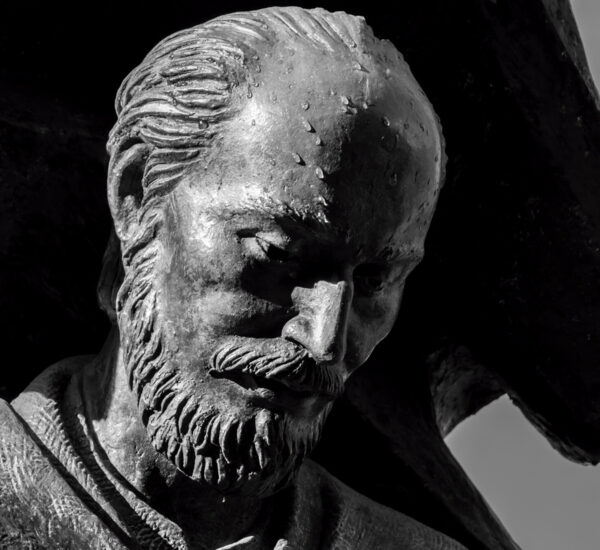
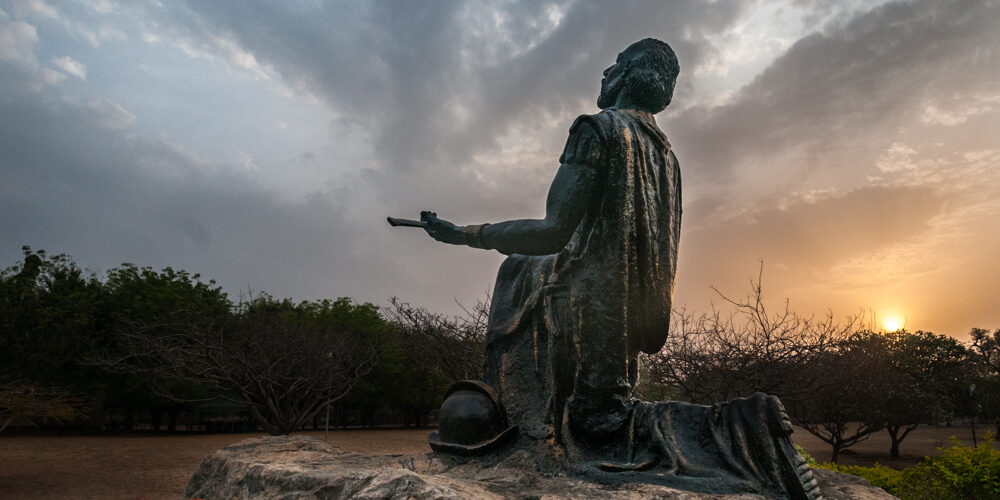
There is no evidence that St Ignatius ever thought of himself as an actor, but history has given him many parts.
In his play As You Like It, Shakespeare uses the stage and acting — one of his favourite images — for reflecting on the different ages of human life:
All the world’s a stage
(Act II, Scene VII)
And men and women merely players;
They have their exits and their entrances;
And one man in his time plays many parts…
There is no evidence that St Ignatius ever thought of himself as an actor, but history has given him many parts. Famously, as courtier, soldier, ascetic, student, priest, and the principal founder of the Society of Jesus. The images or “parts” have changed depending on the religious or political climate of the age. In our own time we have seen a process of reassessment or of recovery of Ignatius and his legacy, especially in the way we now understand and give the Spiritual Exercises.
In the Counter-Reformation and the great expansion of the Church’s missionary activities to the “new worlds,” Ignatius was portrayed as the head of a spiritual army which was missionary on the one hand and a defender of the Catholic faith on the other. Then, with the restoration of the Society after its suppression in 1814, we have Ignatius as the stern ascetic. The Exercises were interpreted as a handbook for an ascetical missionary life lived in self-denying obedience and fidelity to the Church. All of these changing “images” and the interpretations they promote have some element of the truth in them. What they also show is the way in which the “Ignatian” charism, without losing the sense of its ultimate purpose — the radical service of God and neighbour in and through the Church — is both enduring and adaptable. Since Vatican II, the Society of Jesus and our understanding of Ignatius has itself been experiencing an aggiornamento. Ignatius the mystic has come to the fore, and this has allowed for a new appreciation of the sources he has left us, especially the Spiritual Exercises and the Constitutions of the Society of Jesus. Of course, this dimension has always been there, but now it emerges as a powerful and creative resource to bring to the current needs of the Church and the challenges of a changing world order.
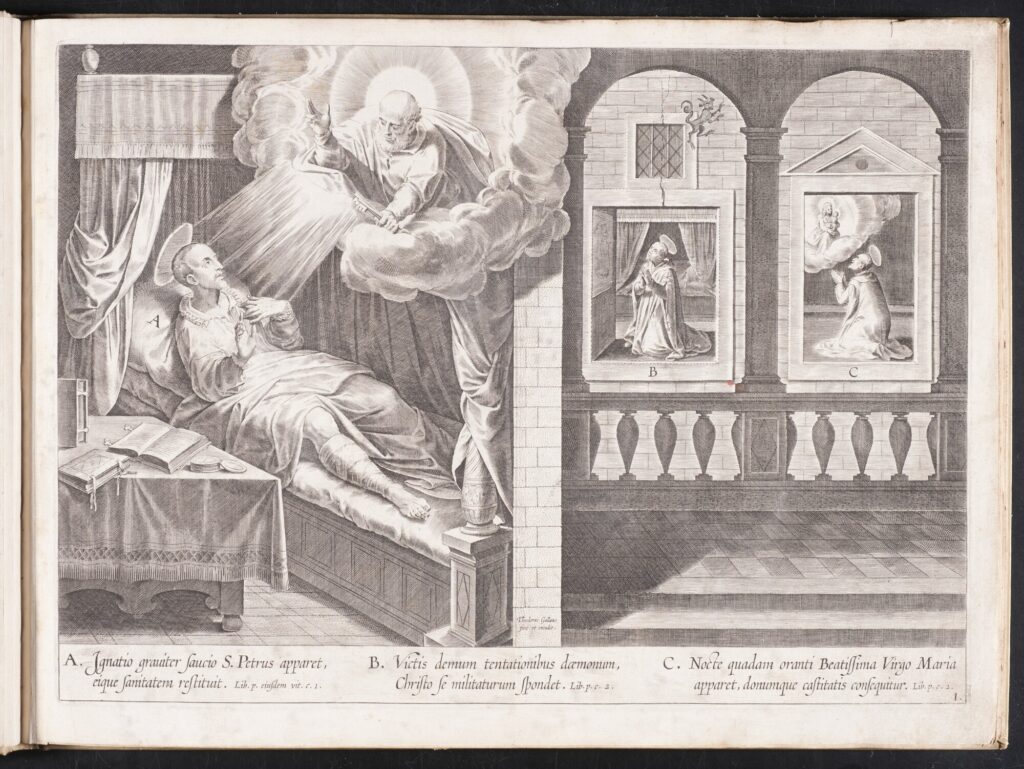
Everyone will be familiar with the story of the wounded soldier who undergoes a conversion while recovering at his family home in Loyola. The emerging of the “pilgrim” Ignatius who divests himself of all his dreams of worldly glory and success, symbolically enacted in his vigil at Montserrat before beginning the prolonged school of his conversion at Manresa. The person who emerges from the long period of prayer, fasting and the spiritual struggles of the cova — the cave still preserved in the centre of Manresa — is not the same person who went in. He emerges with the embryonic gift of the Spiritual Exercises, which he continued to develop in the light of his maturing experience.
I would place the Exercises in the tradition of “vernacular mysticism.” These are writings that surface, largely from women, in the late medieval period. They are “vernacular” because they are produced by devout Christian mystics who had no formal scholastic formation in theology. That does not mean that they were theologically illiterate. Their writings show a profound theological sense; neither are they naïve about the risk their experience brings. They were aware of the dangers that came with expressing a theological opinion or having a “voice” which was often exceptionally personal but not spoken in the usual academic categories of the time. Two great examples would be Dame Julian of Norwich and, later, Teresa of Avila. As readers today can see, there was something compelling and consoling in their experiences of God. It gave them that gospel parrhesia or boldness — the desire to share their mystical experiences and insights as a form of witness to nourish, inspire and comfort God’s people. They also show a deep loyalty to, and patience with, the ecclesial authorities of their times. In this sense, we may see in them the frontrunners for a theology of the laity which would only come fully into its own with Vatican II.
We should not remove Ignatius from their company. Ignatius was a layman when he left Manresa and began his own “apostolate,” using what he had learnt from God and the divine ways of working in our lives and in our world. In Manresa he not only experienced the intensely personal reality of God’s salvific love, but he also developed a method or practice of reflection upon his experience. Although Ignatius does not have the wonderfully vibrant and personal voice of a Dame Julian or Teresa, he certainly has his own language and method to which he remains remarkably faithful throughout his life. To be sure, there are moments of spiritual poetry in the Exercises, the Diary, and the letters, but Ignatius’ gift does not lie so much in mystical eloquence as in the remarkable ability to penetrate its dynamic order and structure. In the Exercises the whole narrative of salvation is opened to us in a personal way. We are always in a relationship of encounter with God, ourselves now understood through this relationship, and with the world in need of redemption; even our understanding and relationship to creation is subtly transformed. Ignatius has been able to change his experience into an apostolic instrument so that it could be of help to others who, like him, were seeking to change their lives — to live a more authentic and vibrant Christian existence in the world. Like the first disciples who were sent into the world by the Risen Christ, Ignatius’ life takes on the same missionary passion and dynamism. In a fascinating way, his own process of conversion at Loyola and Manresa entailed an apostolic commitment which becomes part of the experience of the Exercises. The Exercises themselves do not so much finish as continue into the unlimited and uncharted roads of history with the Risen Christ; into a world where God is always active, whatever the time, place or circumstance.
The same strength of will is as much present in Ignatius after Manresa as before. However, now that strength serves to confront and overcome the many challenges and obstacles that lie ahead. Yet there is a transformation: what could so easily be seen as the same stubborn drive of pride and glory that drove him to a reckless resistance against the French at Pamplona now has a different character. No longer is it the demonstration of ego or pride so much as an absolute commitment to the graces he has received for the service of Christ, his kingdom and the Church. His sense of being a companion of Christ, under the banner of his cross, with the same experience of Paul, compelled by the love of Christ, is now the source of his prudent audacity and tenaciousness; always respectful of ecclesiastical authorities and kings, he refuses to be intimidated by them. The certainty which can come from pride now gives way to the confidence that comes from trusting in the grace of Christ and the ever-present wisdom of the Holy Spirit. Ignatius’ audacity is not recklessness but a discerning availability, the fruit of a redeemed freedom, which makes audacity possible. The invalid whose imagination was so active at Loyola now has a whole new imaginative horizon determined by the call of Christ the King and the greater glory of God: the dynamic of an always greater Love and self-gift.
The Spiritual Exercises, in which Ignatius encodes all of this experience, is a “vernacular text” in the sense that it does not contain any esoteric or secret knowledge. Anyone can make the Exercises and obtain some fruit or receive some gift from them. In doing so, their own imaginative horizon will also change. Although the Exercises are designed for the reform of life and a committed choice or “election” to a way of serving God, they are also a great school of prayer and discernment valuable at any time. They are especially effective for the continuing work of conversion to which any serious Christian life is committed and the nourishing of the freedom which it presupposes.
The recovery of our freedom to love and serve God and our neighbour is one of the great graces of the Exercises. Contemporary culture is saturated with the notion of “freedom,” and yet, in so many ways, its seductive strategies — whether they entail promises of self-realisation, fulfilment and “authenticity” or the satisfaction of our desires — are designed to diminish it. “Choice” has become the art of manipulation. The algorithmic furies that track us and offer us ever more items, images and lifestyles to choose from generate a fraudulent “hyper-agency” in which one choice can never satisfy but only generates multiple others. Like the tragic figure of Laocoön and his sons, the more we struggle against the sea serpents the tighter their grip becomes.
At the beginning of the Exercises, Ignatius proposes a different sort of freedom. In the Principle and Foundation he simply puts before us the purpose for which we have been created — “to praise, reverence and serve God our Lord” — and by this means to save our soul. We are immediately placed in relationship with God. It is not one of servitude but a fullness of life, because it is the expression of love, the Love that is God. The Exercises help us to realise that it is only in loving God that we truly become ourselves. We come to discover anew the plenitude, not only of our own life, but that of all creation. There is no deception here, some marketing offer designed to catch us in the invisible net of desire and promise. Indeed, as we know from the invention of idols, whether sacred or secular, religions themselves are not beyond such ploys. With the simple statement of the Principle and Foundation, Ignatius puts before us the form of the first commandment, which is the charter of all human freedom. It is the truth by which Christ himself lives, showing us how it is the ground of our humanity.
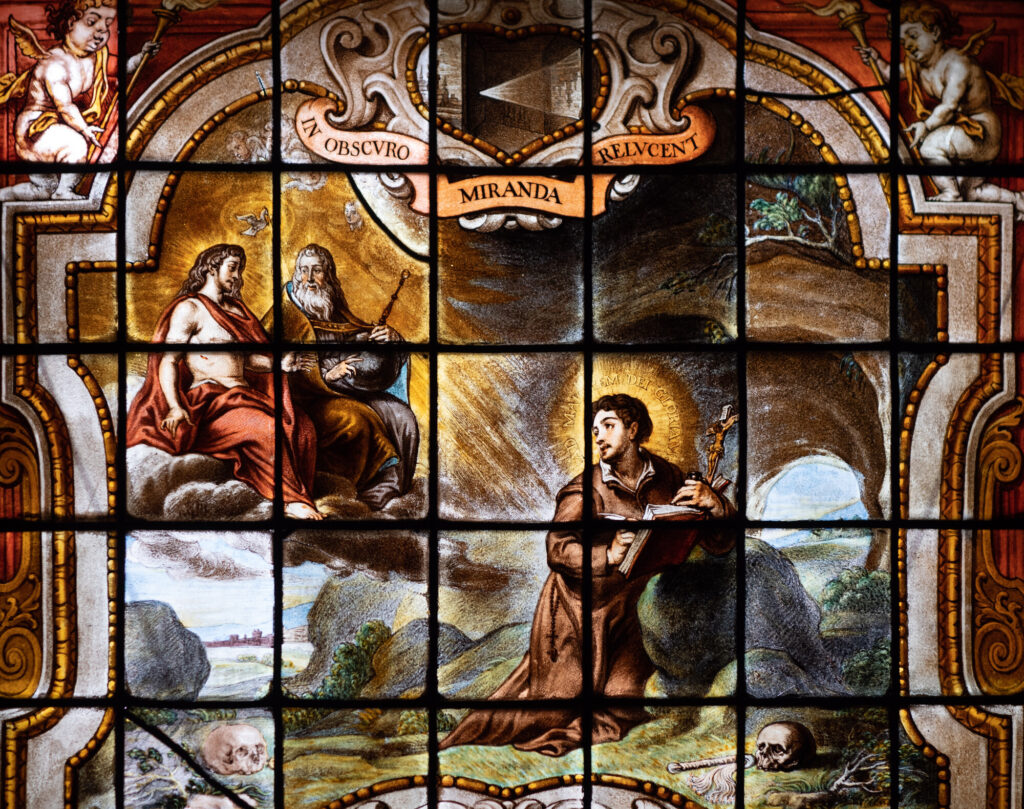
The Principle and Foundation is a truth which can only be proved in living. It invites us to set out on a journey in which the freedom which we have lost is restored. The divine logic behind the gift of freedom is simple: love requires freedom if it is to be real and generative. It cannot be coerced or compelled; it can only be “gift.” If God has created us out of love and in love, and desires us to love God, then God must also have gifted us with such a powerful and beautiful creative freedom. Of course, we can use it to choose many other things other than God. Often we will do so thinking that we are choosing the good or demonstrating our own independence. When this happens we can be drawn into subtle forms of diminishment and impoverishment. For all the glamour and exhilaration that our flawed choices produce, we may begin to sense that they only disguise the growing emptiness and sterility of the world, the life, we are creating. The Exercises give us a way of checking what is true. Are we really free? How can we honestly recognise our own self-deceptions and unfreedoms? How can we discover the freedom and clarity to choose God and the life that loving God brings?
Challenging though the Principle and Foundation is, it gives us a way of re-orienting ourselves — putting ourselves back in this fundamental relationship with God, who alone can free us from our bondage. Coming to understand the reality and depth of the divine love for us and our world in the person of Christ and his loving sacrifice, we begin to enter into the deep grace of our own truth and freedom. The essence of this freedom lies in its capacity to let us transcend ourselves — to love God, others and the whole of creation. We come to see that our freedom is itself a grace — a gift that we cannot give ourselves for all our knowledge and constructs and strategies. When we come to exercise it under “the banner of Christ” and for love of God, we discover that it can be strangely and wonderfully transformative. We do not have to cling to things in the hope that they will make us secure or happy. We can love them genuinely for what they are, helping them fulfil the end for which they, too, have been created. The grace of this freedom, which comes from loving God as our ultimate source and goal, allows us to turn all things — the good and the difficult things — to God’s service. It is this “principle and foundation” — the sovereignty of God in our lives and the grace of knowing God’s love for us and returning it — that is also the foundation of all discernment. We see this most powerfully in the person of Christ himself, especially in his passion, cross and resurrection. In him alone we see the fullness of our discerning freedom realised in love — love of God and love of us and of all humanity. A love worth dying and living for. Ignatius helps us to see more clearly the gift we are offered, and he helps us discover the freedom to accept it with audacity and joy. AMDG.