A Reflection in Light of ‘Evangelii Gaudium’ on the Challenge of Extremism in Social Media
Before constructing our argument, let us pause to recall a familiar contrast, between the fatigue that follows exposure to inflamed religious rhetoric in digital spaces, and the renewed vitality that comes from genuine dialogue shared over tea. This juxtaposition illuminates the gap between digital hostility and authentic human encounter, a gap this reflection seeks to bridge.
The Digital Areopagus and the Crisis of Encounter
In Evangelii Gaudium (art. 251), Pope Francis observes, “True openness involves remaining steadfast in one’s deepest convictions, clear and joyful in one’s own identity, while at the same time being ‘open to understanding those of the other party’ and ‘knowing that dialogue can enrich each side’.” How might this vision be realized in our time?
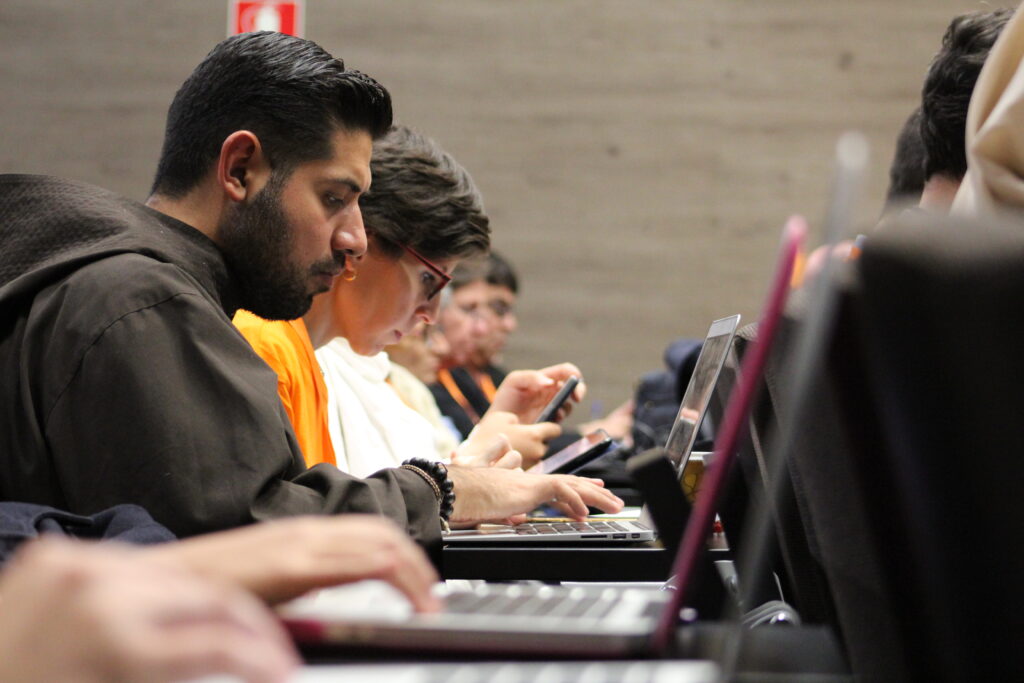
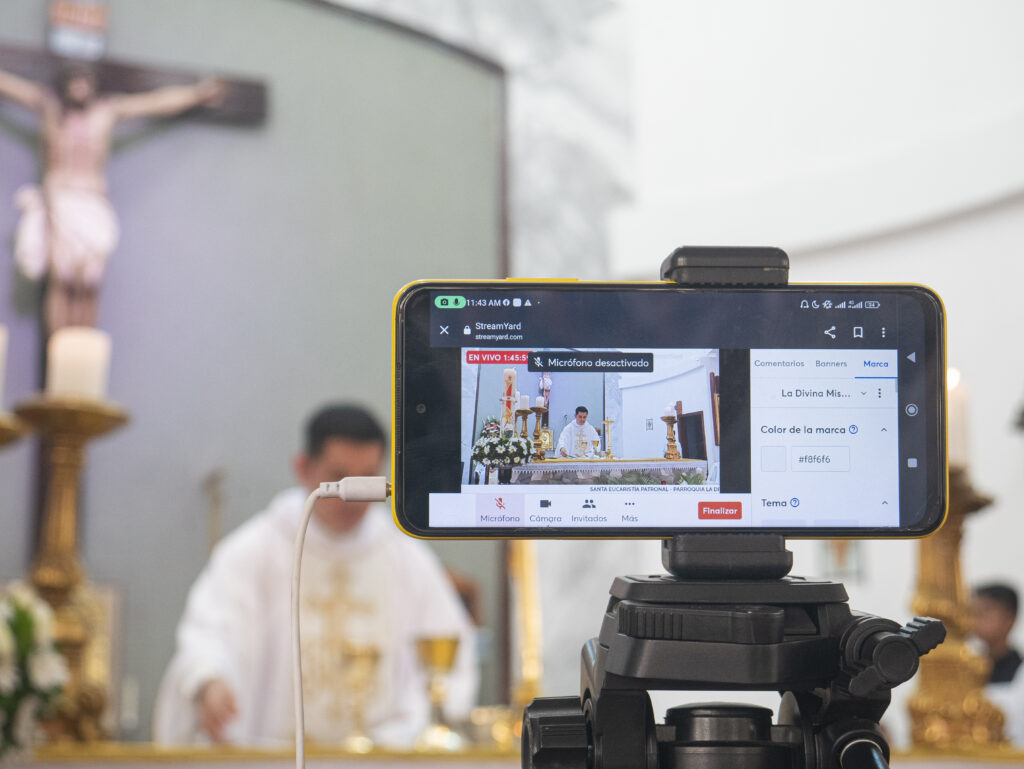
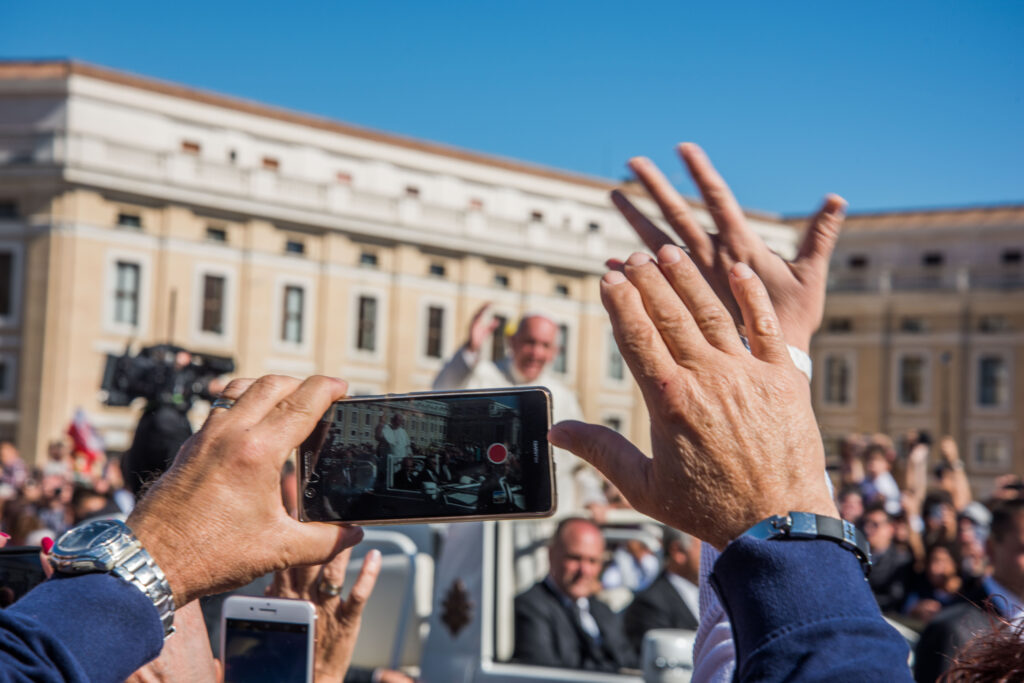
Among the many challenges of the contemporary world stands the digital realm, a space where religious ideas compete, faith is debated, and the Gospel must find new expression. This context bears resemblance to Saint Paul’s Areopagus (cf. Acts 17: 16-34); one might aptly term it the digital Areopagus. Yet the twenty-first-century digital Areopagus differs dramatically from its ancient counterpart. Today’s social media landscape is a noisy, chaotic system governed by algorithms engineered for a single purpose, to keep us bound to our screens. As Pope Francis himself has noted, media sites have become places of toxicity, hate speech and fake news (https://www.vatican.va/content/francesco/en/messages/pont-messages/2022/documents/20220715-messaggio-congresso-signis.html).
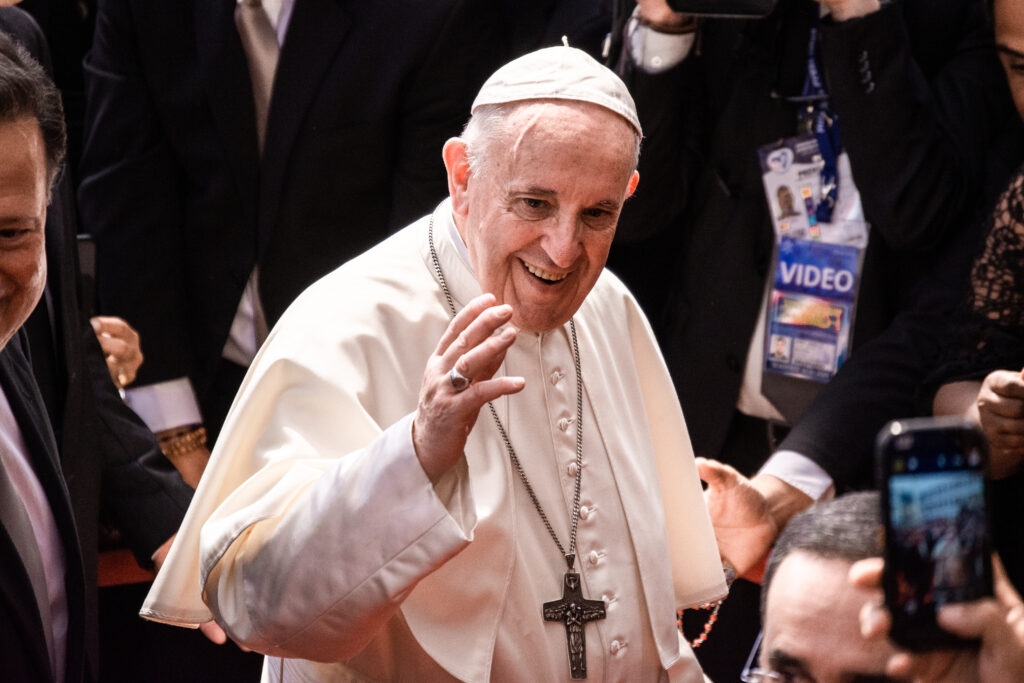
And yet, as Evangelii Gaudium (art. 1) insists, “The joy of the Gospel fills the hearts and lives of all who encounter Jesus.” This joy does not ignore the darkness; it simply refuses to grant it the final word. We are challenged, therefore, to learn the art of inhabiting the digital storm with grace.
Experiences That Shape the Very Being
Each of us, in our digital wanderings, has encountered interreligious exchanges that carry both the capacity to wound and the potential to heal. Painful examples are all too familiar, such as: (1) a heartfelt post about faith is met with a barrage of out-of-context scriptural quotations weaponized for condemnation, (2) a thoughtful discussion is hijacked by proselytizing remarks irrelevant to the topic, (3) a member of a religious minority shares a personal story or cultural tradition only to receive unsourced, hostile ‘facts’ designed to erode their identity, (4) a provocateur posts inflammatory bigotry, cynically invoking the principles of free dialogue.
These examples share a common thread, namely the utter absence of genuine curiosity, respect, and recognition of the other as a person. Historical context is ignored, complex realities are flattened into stereotypes, and lived experience becomes the target of attack. The pain inflicted here stems not from honest disagreement, but from the reduction of the other to a target, an audience, or a problem to be managed, never a person to be encountered.
The following examples on the moments of grace may reveal what genuine encounter can look like. (1) It occurred offline in a hospital between a Christian woman and a Muslim man. She did not see him as a representative of a religion but simply as a person in distress due to his sick mother. They sat together in silence for ten minutes, not as an awkward pause but as a shared acknowledgment that words were inadequate. In that moment, religious labels faded; they were simply two people sharing vulnerability. (2) It happened online, where a non-believer, learning that his friend was observing Ramadan, asked curious questions about the fasting experience rather than debating beliefs. His final remark expressing admiration showed respect beyond religious difference. All these remind us that genuine encounter and kindness remain real possibilities, even in a digital world often shaped by suspicion.
Extremism and Post-Truth in Virtual and Social Media
We have moved from traditional mass media, a one-to-many model with professional gatekeepers, to social media’s many-to-many architecture, where algorithms engineered for engagement exploit human emotion. This fundamental shift in who speaks and how information circulates has profound implications, marking the rise of post-truth as a seismic force in how beliefs are formed. According to Oxford Dictionaries, post-truth can be defined as ‘circumstances in which objective facts are less influential in shaping public opinion than appeals to emotion and personal belief’ (https://global.oup.com/academic/content/word-of-the-year/?cc=id&lang=en#main-content), in which the prefix ‘post’ signals that truth has become secondary, even irrelevant, dethroned from its position as the ultimate arbiter of valid argument.
The core characteristics of post-truth are unmistakable, namely the primacy of emotion over accuracy, the erosion of trust in traditional authorities, the blurring of fact and opinion, and the fragmentation of shared reality into competing alternative realities. A statement’s effectiveness is no longer judged by its correspondence to fact, but by its emotional resonance. Post-truth rhetoric bypasses the rational mind and speaks directly to the affective core.
A YouTuber’s or Instagram influencer’s or a friend’s social media post can carry more authority than peer-reviewed research, precisely because personal connection feels more trustworthy. When emotion consistently trumps fact and trusted institutions fragment, society itself fractures.
The case of Bangun Samudra, an Indonesian Muslim convert who claimed to have earned a doctorate in theology from a university in the city of Vatican after only three years of study, exemplifies the post-truth dynamic (cf. https://www.instagram.com/p/B8xm_M2FGt2/). A university in the city of Vatican? A doctorate in 3 years? Here, what resonated with people wasn’t the truth of the credentials, but the feeling of pride in having a leader who seemed so distinguished. The speed with which thousands believed the claim became more significant than the falsehood itself. This is a story about a post-truth ecosystem, wherein a lie’s capacity to confirm biases and provoke reactions renders it more viral, and for some, more ‘true’, than any subsequent correction.
On social media, where anyone can be a source, content is filtered through the lens of individual emotion rather than professional objectivity. Personal bias, including prejudice, becomes the dominant currency. While biases themselves are neutral cognitive shortcuts, they become fertile ground for more dangerous ideas when activated by provocation, hardening into settled prejudice. Prejudice, in turn, forges a powerful sense of identity, in such a way that the individual now perceives themselves as part of a virtuous in-group, ‘the defenders of the faith’ for instance, threatened by a malicious out-group. It is at this juncture that extremist voices emerge, offering violent solutions to complex problems.
Extremism operates on a seductive logic, about which complexity is simplified by blaming identifiable enemies, and the clarity of total certainty is offered as a remedy for ambiguity. As such, extremism and post-truth are codependent. Extremism’s power lies not in factual accuracy but in emotional resonance, such as outrage, fear, hatred. Its function is to make the ‘in-group’ feel existentially threatened while rendering the ‘out-group’ despicable. At this endpoint, the individual becomes immunized against reality, living within an ideological bubble where any action against the perceived threat is deemed righteous.
In his 2013 Lampedusa visit, Pope Francis has famously warned against ‘the globalization of indifference’. Yet extremism in the digital world, and the online activities through which it propagates, represents something more disturbing, namely a globalization of hostility. It is not merely that we fail to care for the other, but we are actively taught to fear them, to despise them, to see them as a threat to our very existence. When religious communities enter these systems uncritically, they fall into the trap of dehumanization. The believer becomes a consumer; the seeker becomes a data point; the neighbour becomes a competitor for attention.
Call for Developing a ‘Grammar of the Heart’
In his letter (1541) to two of his companions, Alfonso Salmerón and Paschase Broët, St. Ignatius of Loyola wrote:
Whenever we wish to win someone over and engage him in the greater service of God our Lord, we should use the same strategy for good which the enemy employs to draw a good soul to evil. He enters through the other’s door and comes out his own.
From this perspective, we might enter through the door of post-truth that tends to privilege emotion as ‘heart-stirring’, in order to exit through the vision articulated by Pope Francis, ‘a grammar of the heart’ (cf. Evangelii Gaudium art. 142-144, 149-151).

Evangelii Gaudium affirms the human person as created for encounter, capable of transcendence, and destined for communion. This emphasis reveals a profound truth, that the method of communication is inseparable from the message itself. If our language is harsh and judgmental, it will never reach the excluded; it will only push them further away. But if our language is joyful and merciful, it builds a bridge, offering an encounter with a loving God and fellow human beings. This is the essence of the missionary spirit, to go out and find the lost, bearing the gift of mercy and joy, with a heart that is open to everyone.
In a digital environment defined by speed, the contemplative pause is a radical act. It is the refusal to react immediately, to post impulsively, to join the chorus of indignation. This pause creates space for discernment. In that space, we can ask: What is being evoked in me by this content? Is it leading me toward love or toward fear? How would I respond if this person were sitting across from me? The contemplative pause is the precondition for genuine agency. It allows us to respond rather than react, to speak from freedom rather than compulsion.
From this contemplative ground, specific practices can emerge. First, the practice of reading or listening with charity. Before responding to a post from another religious perspective, we might attend to it carefully.
Second, the practice of bearing witness. Not every digital moment requires a response. Sometimes the most powerful witness is simply to be present, to let our profile, our comments, our very existence in a space testify to another way of being human.
Third, the practice of amplifying marginalized voices. One concrete practice of interfaith dialogue is to use whatever platform we have to elevate those within other religious communities who are themselves working for peace, who critique extremism, who embody the best of their tradition. This is an act of solidarity.
Fourth, the practice of ‘digital sabbath’. The contemplative life requires rhythms of withdrawal, a regular time of disconnection. This is not escapism, but a recognition that we cannot give what we do not have. To bring the joy of the Gospel in the virtual world, we must first receive it in silence, in prayer.
Finally, praxis requires imagination. We must be able to envision digital spaces differently than they currently are. What would a social media platform look like if it were designed to foster encounter rather than outrage? What algorithms would we write if our goal were not engagement, but communion? These are not merely technical questions. They are theological ones. They require us to imagine the digital Areopagus as a place where the Gospel can be proclaimed not as a weapon, but as an invitation to joy.
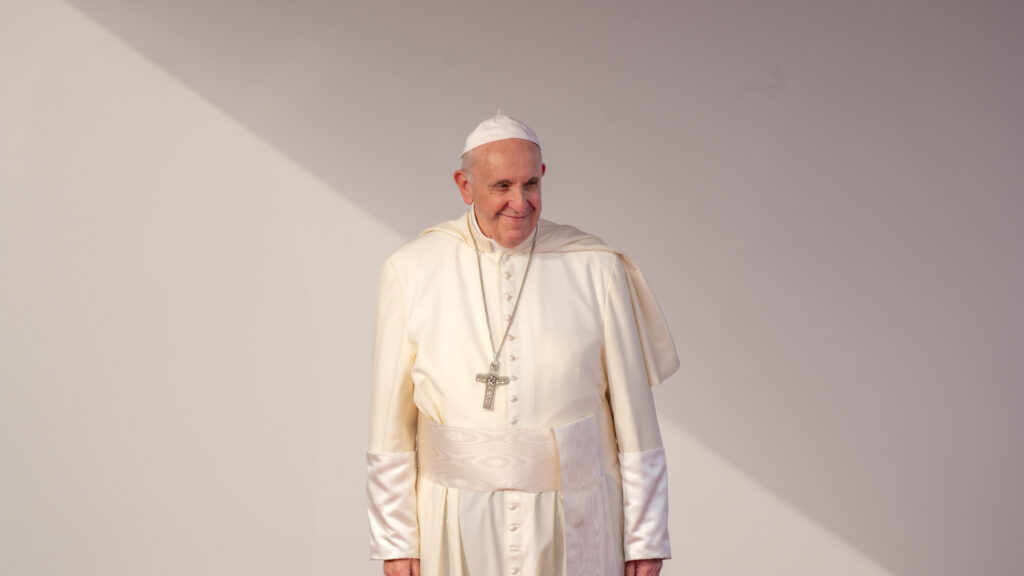
The digital world is a battlefield. The wounded are everywhere. Some of them are us. But the field of hospital is also where healing happens. It is where the exhausted are rested, the broken are bound up, and the fearful are reminded that they are loved. To be agents of that healing in the digital space is not a distraction from the mission of the Church. It is the mission. The joy of the Gospel should not be defeated by the algorithm.
Conclusion
This article has proposed a framework for interreligious dialogue that is theologically grounded in Pope Francis’s Evangelii Gaudium, experientially rooted in the concrete challenges of social media extremism, and intentionally structured to engage not only the intellect but also the heart, ultimately moving toward transformative praxis. Drawing on the metaphor of the digital Areopagus, it has argued that the current crisis of polarization in the digital world demands a dialogical approach that is contemplative, prophetic, and joyfully missionary. More than mere analysis, this reflection offers a pathway for personal and communal conversion in the way we inhabit digital spaces.