Walking with the Invisible: Sister María Constanza’s Journey of Faith and Service
Haga clic aquí para la versión en español
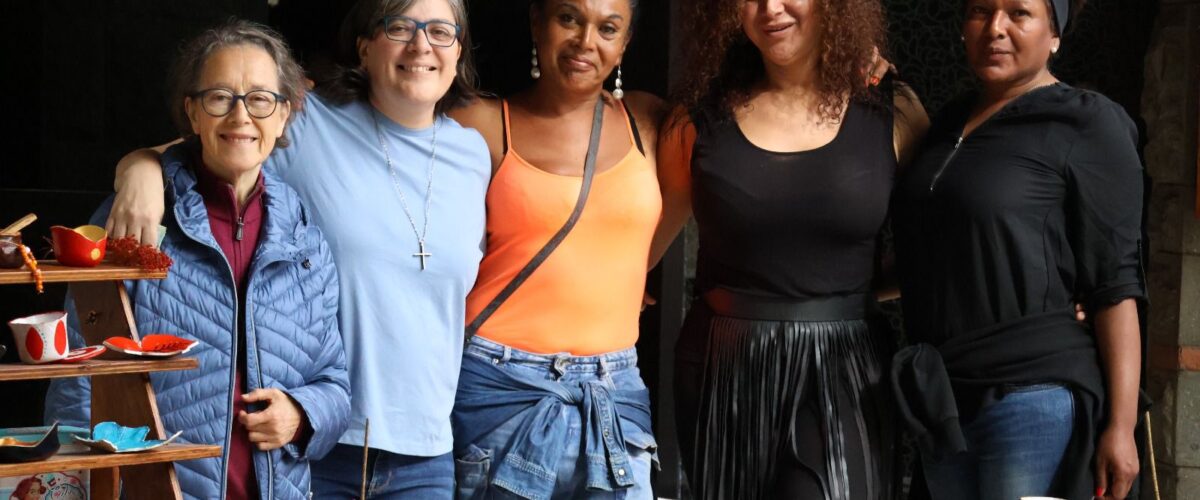
Sister María Constanza Cecilia Mattera, a member of the Sisters of the Holy Family of Urgell, shares a profound testimony of vocation born from service and compassion. From the streets of Buenos Aires to the heart of Rome, her mission has led her to accompany transgender women in prostitution and Roma families, walking beside those society often overlooks. Through her ministry, Sister Constanza discovers the transforming power of Faith, community, and human dignity—an ongoing journey of encountering God in the margins.
God’s call in my life did not manifest itself in a single way. I was very happy with my university life, my job, and my friends. Buenos Aires was a place I loved deeply. I had everything I needed.
The Lord had to struggle quite a lot so that I could recognise His voice amid my personal interests. I believe He used a marvellous tool: service. The sign I can clearly recognise throughout my life as a “vocational path, presence and voice of the Lord in my life” is the encounter with my most vulnerable neighbour. I always found meaning in my life through pastoral work in the Villas Miserias (slums) of Buenos Aires, volunteering with children with Down syndrome, accompanying the most forgotten members of society, and seeking their inclusion and dignity. My family also had a strong commitment to service, and this was another drop in the ocean that helped to shape my identity and find my vocation.
All this led me to make a decision: to dare to walk along the margins with those who, without choice, have no option but to accept that social destiny.
At one time, it might have been a utopia—perhaps mixed with a political streak so typical of Argentinians, and of my own family—but as the journey continued, it was purified. I found the Lord in this choice, which turned out to be His will for me: a choice that is not always easy, because one must battle one’s own inner demons—rejection, prejudice, fatigue, doubts. But the Lord always shakes us up, brings us back to the starting point, and sends us forth on mission.
I have always felt a special vocation “on the street”, among those who are unseen, those we do not see. And after a time of many difficulties for various reasons, everything began to unfold—step by step—we were guided towards this service of charity in our community in Rome.
At this moment, my life is dedicated, together with my community, to transgender women who, for various reasons, find themselves in situations of prostitution. But this mission does not end there “on the street, at night”; we also offer a path towards freedom. A pastoral community has been born, made up of brothers and sisters with whom we walk together. We also work pastorally with Roma children and women, alongside a team of lay people.
All this “saves” me, transforms me, changes the way I think and judge others. It places me on my own path. Knowing their stories, listening, walking alongside these people for eight years without ever stopping has allowed me to understand, to put myself in another’s place, to share their pain and to commit myself to their dreams and desires. We all long and wish to live deeply.
Society has a very superficial view of reality. Are we more spectators than participants in this reality? It’s a good question to ask ourselves. It is easy to watch from the outside and to criticise.
There are many signs of God along this journey—my own, that of my group, and of the shared path with transgender women, Roma children and their families:
- First of all, we are a “pastoral community”: no one carries the weight alone or rejoices alone when steps of liberation are taken. Without a network, there are few possibilities; without community, it is impossible—and not worth it.
- We also understand that we are a community with these women, that we grow together, that they have a place in our communities, that we can commit ourselves to their fundamental rights and social inclusion. As we walk together, creative and just responses have been born—ways to have an “excuse to be community”. This is not only a sign of God, but a confirmation of His presence among us.
- Our religious family’s accompaniment—their participation, support, and understanding—opens new horizons and offers real signs of the Lord’s presence.
In the same way, the Lord gives us strength in difficult times, when the road ahead is unclear. He always comforts us and reminds us that beyond the results—which are always His grace—what truly matters is taking one step after another, not giving up or stopping.
I believe our journey is also marked by discernment, by the search for the Lord’s will for these women, for the Roma children, and for ourselves. The diversity of our pastoral team is wonderful.
There is no action that is not purified by the way of Jesus. He shows us the how, one way or another. Our prejudices, personal pursuits, lack of faith, or moments of darkness are purified along the way—through prayer and through the presence of our brothers and sisters on the journey.
I have encountered many stories in this mission. I have seen children among us—needy, homeless, without the means that any other child would have—and I have “served”, deciding to feed the most in need. I have seen strong transgender women face illness with enormous greatness, forgive many wounds, and care deeply for others—often much more than we do, than I do myself, who sometimes “has everything”. This moves me deeply. And I learn the pure joy of service; I am confronted by my own selfishness and smallness.
I believe that silence in mission is born when we “return home”—both from the street and within our communities. To return home is not to overlook what has happened, but to keep it in one’s heart, without offering absurd or ready-made answers. It means understanding how God dwells in each person, in everyone. It means believing that God loves us all as His daughters and sons.
To remember, to keep alive the memory of what we have lived—by listening and embracing—allows something new to be born; it is always a new starting point.
As consecrated women, responding to the signs of the times, I believe we are called to “leave our peaceful communities” and go to the frontiers—where no one wants to go, where there is prejudice, marginalisation, invisibility—and give voice to those who have none. Daring to commit ourselves to this restoration is a human challenge, but also an utterly evangelical one. “To go out”, as Pope Francis says, is nothing new; it is a return to the mission of the Lord Jesus—walking with our suffering brothers and sisters, seeking answers together, daring to take the journey!