When Pope Francis visited Lampedusa in 2013, he did not arrive with political proposals, but with a heavy heart. In the following article, Danielle Vella explores how his moral urgency regarding refugees was a deeply rooted conviction, not mere rhetoric, and reflects on what it truly means to fill our hearts with names and faces.
“In preaching the Gospel, a fitting sense of proportion has to be maintained. This would be seen in the frequency with which certain themes are brought up and the emphasis given to them in preaching.” Anyone in doubt that Pope Francis practised what he preached must read these lines from Evangelii Gaudium. For him, “the privileged recipients” of the Gospel message were always the poor, vulnerable and outcast, and he never missed an opportunity to say so with characteristic frankness. In his 2013 apostolic exhortation, he wondered, “why cloud something so clear?”
Pope Francis and the Heart for Refugees
Pope Francis arguably had a special place in his heart for refugees. In Evangelii Gaudium, stating the need to “draw near to new forms of poverty and vulnerability,” he mentioned refugees and said: “Migrants present a particular challenge for me, since I am the pastor of a Church without frontiers, a Church which considers herself mother to all.” Pope Francis challenged each and every one of us to acknowledge the humanitarian crisis made flesh in the suffering of millions of refugees worldwide. He urged us to have the courage to welcome them and led the way with practical gestures and suggestions.
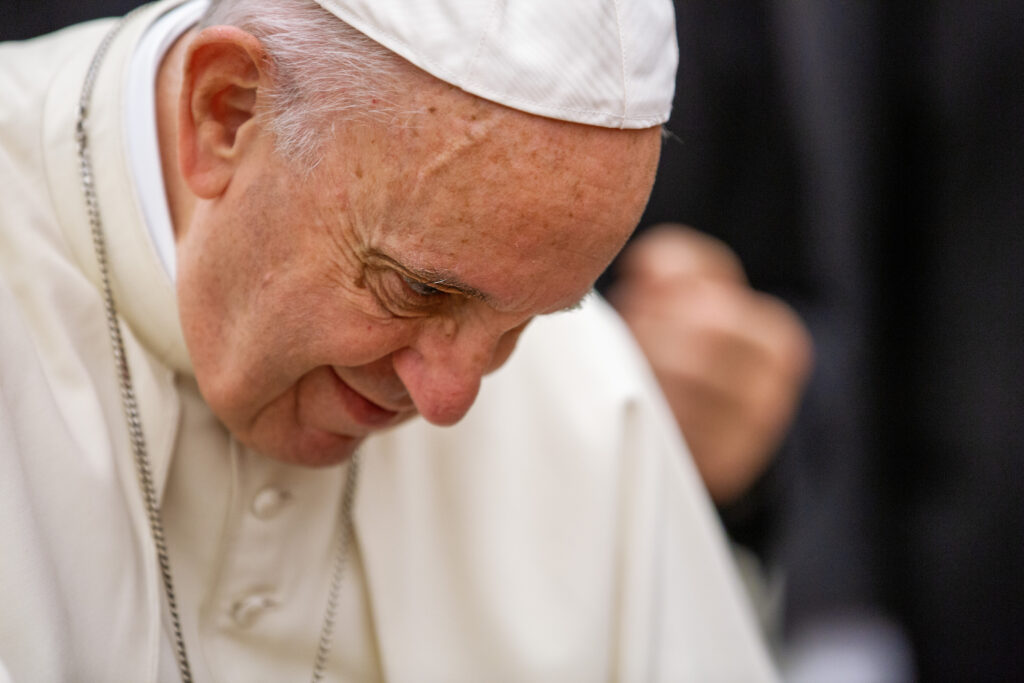
Soon after becoming pope, Francis met refugees at the JRS soup kitchen in Rome. He urged religious congregations and institutes to open their doors to refugees, saying: “We need communities with solidarity that really put love into practice.” Four verbs became his go-to guide for those who wanted to help – welcome, protect, promote, integrate.
One of his first trips as pope was to Lampedusa, a tiny island on the deadly migration route in the Central Mediterranean Sea. During that landmark visit in 2013, Pope Francis deplored the “globalization of indifference” and made a direct appeal that echoes to this day: “Where is your brother? His blood cries out to me,’ says the Lord. This is not a question directed to others; it is a question directed to me, to you, to each of us… Who is responsible for the blood of these brothers and sisters of ours? Nobody! That is our answer: It isn’t me; I don’t have anything to do with it; it must be someone else, but certainly not me.”
Responsibility and Compassion
Pope Francis consistently returned to two unequivocal appeals: take responsibility for the preventable deaths of refugees at your borders, and find the heart to weep over their suffering. In Evangelii Gaudium, he wrote: “Almost without being aware of it, we end up being incapable of feeling compassion at the outcry of the poor, weeping for other people’s pain, and feeling a need to help them, as though all this were someone else’s responsibility and not our own.” He continued: “We incarnate the duty of hearing the cry of the poor when we are deeply moved by the suffering of others.”
This twofold call resonates deeply with me, inspiring my motivation to meet refugees and to invite them to narrate their story, which I in turn disseminate. The power of stories to move people’s hearts is incredible. Pope Francis said as much when he told refugees in Cyprus in 2021: “Your testimonies are like a ‘mirror’ held up to us, to our Christian communities.”
The Courage of the Narrative
In telling and retelling their stories with the rest of us, refugees commit a truly courageous act. One reason why they are willing to do so is to highlight the horrors they faced back home, then on their journey to find safety, and sometimes even in the country where they thought they’d found it. I remember Rose,* who fled torture and persecution in Democratic Republic of Congo, and came to Italy. Her impetus for sharing her story with me, years ago, was simple: “Don’t you know what is going on in my country? Why don’t you go to see? European countries must come and see what is happening. Who is going to help? Every day, there is so much death and so many atrocities. Who can we tell about them?”
With their story, refugees also want to set the record straight about their unique trajectory, instead of allowing others to squeeze them into a label with attendant stereotypes. Sometimes, we hold communications workshops, and refugees generate the messages that they want to transmit. “I came here because I had to,” is a frequent one. And another: “I am not what you think I am. I am a human being like you.”
Faces, Names, and Individual Stories
Pope Francis seemed to intuit the refugees’ deep need for recognition. Speaking to residents of the Greek island of Lesbos in 2016, he said: “We must never forget that migrants, rather than simply being a statistic, are first of all persons who have faces, names and individual stories.” And in the encyclical Fratelli Tutti, he said: “We achieve fulfilment when we break down walls and our hearts are filled with faces and names!”
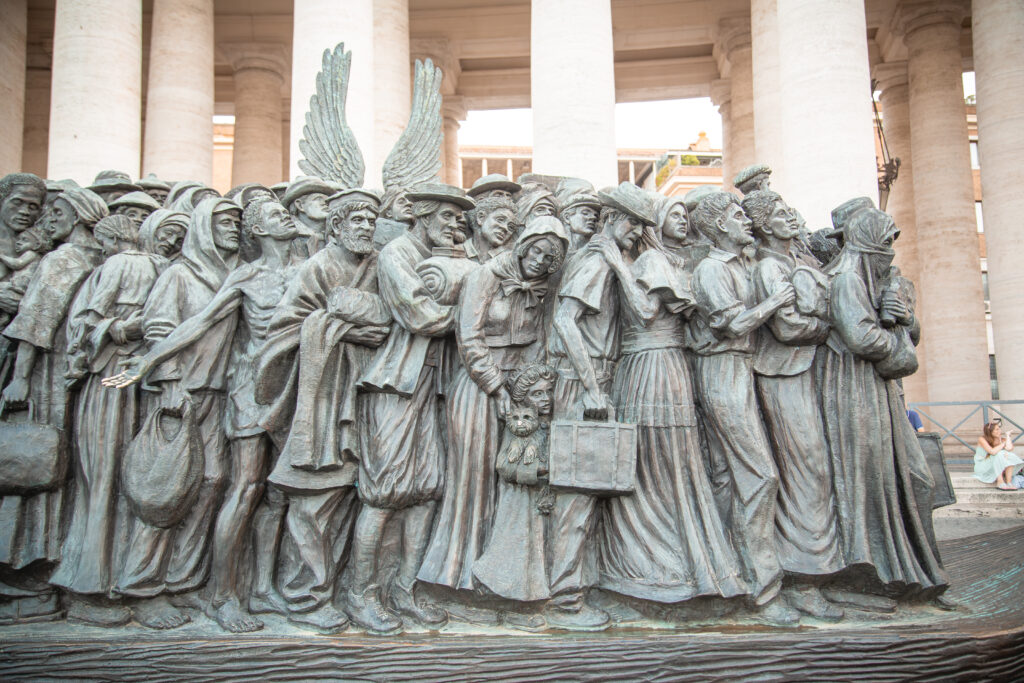
Pope Francis did not get lost in quibbling over labels, such as who is a refugee or an immigrant, legal or otherwise, deserving or not. Needless to say, his position aligned with Catholic Social Teaching, which chose the term ‘de facto refugee’ to embrace people forced to escape war, persecution, and natural disasters, as well as victims of erroneous economic policy. Pope Francis’ words pierced through relativizing rhetoric to go to the heart of the matter: the human experience of those who risk life to find it. Back in Lampedusa, he said: “These brothers and sisters of ours were trying to escape difficult situations to find some serenity and peace; they were looking for a better place for themselves and their families, but instead they found death. How often do such people fail to find understanding, fail to find acceptance, fail to find solidarity.”
A New Mindset of Solidarity
Pope Francis badly wanted us to care, not only about refugees but about all those cast out of a world built on an “economy of exclusion and inequality” that fashions a golden calf out of personal prosperity and could not care less about the “leftovers”, those “lives stunted by lack of opportunity.” His incisive thoughts on solidarity in Evangelii Gaudium offer a reality check for the twisted status quo. Calling solidarity an overused and often misunderstood word, he said it “presumes the creation of a new mindset which thinks in terms of community and the priority of the life of all over the appropriation of goods by a few.”
At the same time as directing our attention to structural injustice, Pope Francis rescued solidarity from mere loftiness by describing it also as “small daily acts… in meeting the real needs which we encounter.” Such acts of generosity can make all the difference, more than we can ask or imagine. I always ask refugees if they were shown any kindness during their journey, and have yet to receive a negative reply.
Lessons from the Good Samaritan
And now I remember Libya. Most refugees talk with fear about their passage through this volatile country en route to Europe, where they are forced to face a gauntlet of abuse, exploitation, arbitrary arrest and detention by state and nonstate actors. One referred to the country as “Hell. Everything is bad there. Everyone has a gun and everyone uses it how they want. Even if you are a human being, it doesn’t matter. If you are black, your life is not important.” Before long, I had shaped a mental ‘single story’ about Libya that subscribed to this viewpoint.
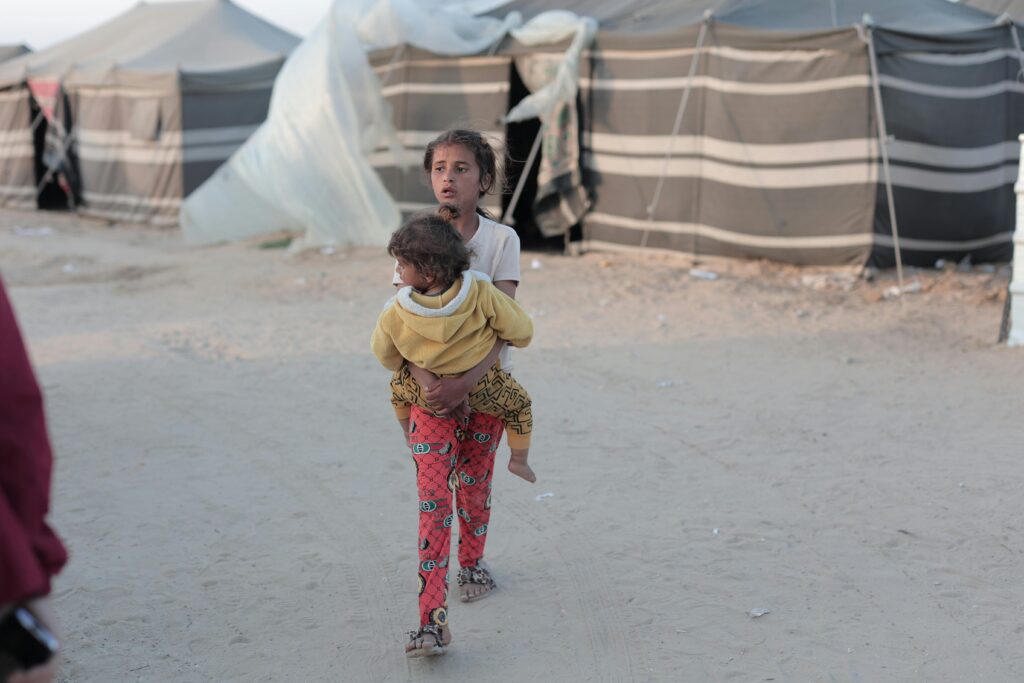
Then I learned of the Good Samaritans who appeared in the guise of ordinary Libyan people. One refugee from West Africa, Amadou,* had been reduced to such an emaciated state in a Libyan prison that the guards left him for dead in the desert. He recalled: “An elderly man was passing with his herd of livestock and found me. He welcomed me to his house and took me to the hospital. He did everything for me.” His benefactor was named Abdullah. After attempting in vain to persuade Amadou not to take the risky boat journey to Italy, Abdullah paid for the costly trip himself. A teenager, Emil,* told me how his father and two little brothers were jailed in Libya, and a ransom demanded. A Libyan man named Mahomet, who had befriended the family, paid for their release.
Witness the model of the Good Samaritan that Pope Francis frequently evoked, who displayed a “love that builds a fraternity open to all, without exception”. Just like the parable, ‘Good Samaritans’ dispel our stereotypes and ‘single stories’, if only we can overcome “the close-mindedness and prejudice that can prevent us from truly encountering one another” – another appeal from Pope Francis, when he met refugees in Cyprus in 2021.
Letting Ourselves Be Evangelised
On the topic of ‘single stories’, Pope Francis made it clear in Evangelii Gaudium that the ‘poor’ are not merely the recipients of the Gospel message, they are those who bring this Good News to us. He wrote: “This is why I want a Church which is poor and for the poor. They have much to teach us… in their difficulties they know the suffering Christ. We need to let ourselves be evangelised by them… We are called to find Christ in them, to lend our voice to their causes, but also to be their friends, to listen to them, to speak for them.” This realisation keeps us from falling into the temptation of patronising refugees with our charity.
The story of St Paul’s shipwreck on the island of Malta, in the Acts of the Apostles (chapters 27-28), is indicative. The islanders welcomed Paul and the other survivors with “unusual kindness”. When the survivors left Malta, their hosts gave them all they needed for their journey. And they received from Paul at least as much as they gave, his gifts of healing and faith, a mutuality of exchange albeit at different levels of need.
Hope Amid Distress
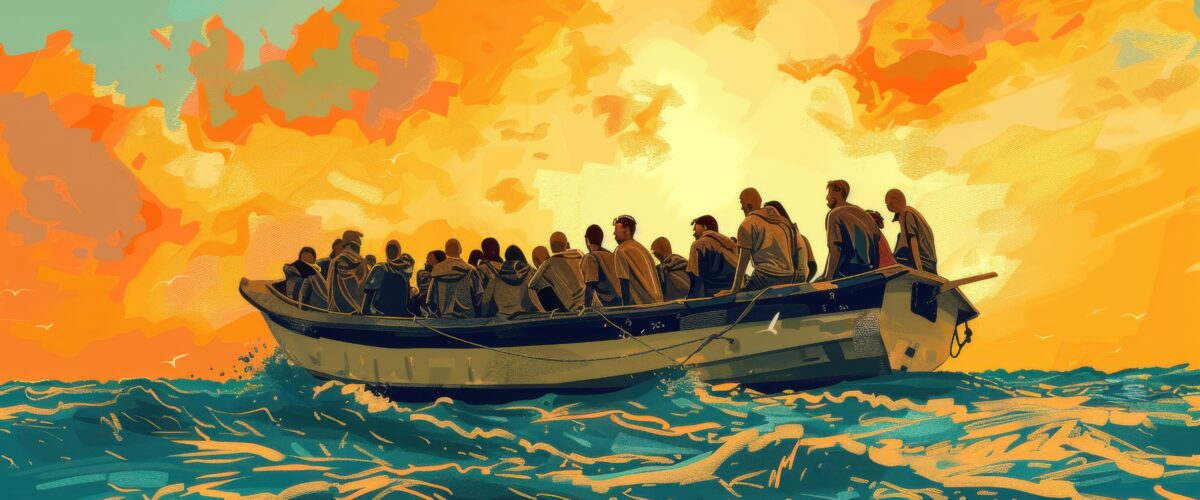
I cannot help but think about so many others shipwrecked in the Mediterranean these days, and glimpse in them the “believer” described by Pope Francis in Evangelii Gaudium as “one who remembers”. He wrote: “I understand the grief of people who have to endure great suffering, yet slowly but surely, we all have to let the joy of faith slowly revive as a quiet yet firm trust, even amid the greatest distress: ‘My soul is bereft of peace; I have forgotten what happiness is… But this I call to mind, and therefore I have hope: the steadfast love of the Lord never ceases, his mercies never come to an end; they are new every morning.”
Refugees from diverse religious backgrounds echo this biblical sentiment when narrating their stories. “I thought I was finished but God saved me. He said, “You come here alive,” one told me. And another: “I knew I would survive, if it is His will, because He alone holds your fate in His hands.” Their faith is humbling and impressive. Ultimately, the refugees hope not only in God’s mercy but also in that of their fellow human beings. This hope propels them to risk dying to live. I remember a Pakistani teenager I met at a JRS shelter in Athens. Waqar was buoyant with hope. “We like to watch National Geographic Channel, you know?” he told me excitedly. “We see how people from the west love animals so much, so why not humans? We are sure that Europeans care for the human rights of every person.”
A Legacy of Equal Dignity
And so, we come full circle to the appeal of Pope Francis to care, to his vision of a world built on fraternity, solidarity, justice and equal dignity. In February 2025, he wrote a letter to the US Bishops’ Conference to decry that country’s mass deportations program and to caution against narratives that criminalise and discriminate against refugees. One sentence stands out: “What is built on the basis of force, and not on the truth about the equal dignity of every human being, begins badly and will end badly.” This echoes a powerful sentence in Evangelii Gaudium: “The dignity of the human person and the common good rank higher than the comfort of those who refuse to renounce their privileges. When these values are threatened, a prophetic voice must be raised.”
Francis was this voice, ending his papacy as he had started it, by proclaiming that the world is veering badly off course in its treatment of refugees. Let us continue to honour his legacy by doing the same.