On March 13, 2013, that first evening, Pope Francis appeared on the loggia of St. Peter’s and said simply: “Let us begin this journey: The Bishop and the people.” It was a profoundly synodal gesture expressing how pastors and faithful are bounded together, but it was also something more: an invitation to understand the Church not as an institution governed from above, but as a people walking together as brothers and sisters in Christ. And a people, as Francis would say repeatedly, has a face that is predominantly feminine.
In a daily morning meditation delivered on May 21, 2018, Pope Francis made a statement using a suggestive image: “The Church is woman, she is mother.” This was a theological claim with demanding consequences. If the Church may be envisioned as a woman in her very identity then a Church in which women are not listened to and involved in decision-making is, in a real sense, a Church that has not yet fully become what she is.
Francis returned to this conviction in many forms throughout his pontificate. In Evangelii Gaudium (2013), he wrote that “the feminine genius is needed in all expressions of Church life” (n. 228), and called for “a more incisive female presence” in ecclesial contexts. He acknowledged honestly, and repeatedly, that the Church had not yet found the theological language or the institutional forms adequate to this vision. But he refused to close the question. Instead, he opened a synodal process in which the question of women would be placed at the very center of the Church’s common discernment. In fact, each synod from the Synod on Family to the Synod on Synodality, without forgetting the synod on youth and the synod on the Amazon, has been a sound box to hear women’s voice and highlight the importance of their role in the church and in the society.
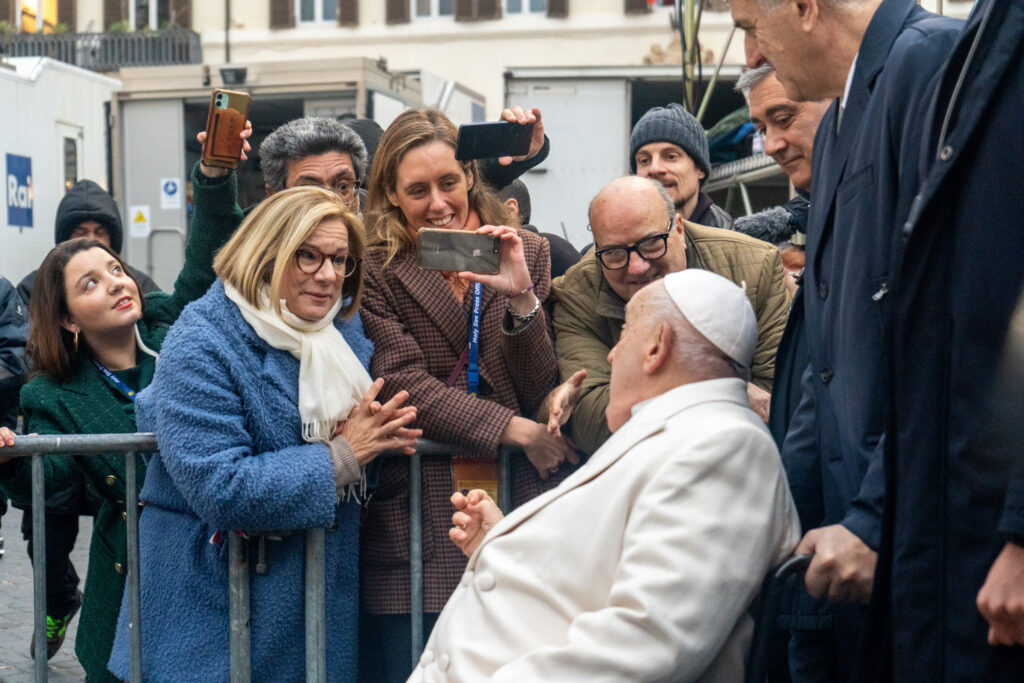
What Francis understood, and what his pontificate progressively revealed, is that the missionary renewal of the Church and the recognition of women’s full participation are not two separate dynamics. They are one and the same. A Church that does not listen to the voice of women — in theological reflection, in governance, in pastoral discernment, in the public square — is a Church that does not fully listen to the Spirit speaking through all the baptized and people of good will and cannot be genuinely missionary.
The roots of this conviction go deep into Scripture. It was women who first witnessed the Resurrection and were sent to announce it. And in a significant move, the memorial of Saint Mary Magdalene “the apostle of the apostles” was elevated to a Feast on 3 June 2016 by Pope Francis during the Jubilee of Mercy. It was women who, throughout the history of
the Church, have been the primary bearers of living faith in families, communities, and often in the most hostile and peripheral environments. Pope Francis frequently evoked the image of the “people of God” and spoke of the sensus fidei — the instinctive sense of faith that belongs to the whole Church — as something carried in particular by the poor and by women who are always the poorest of the poor and the first victims of violence, unemployment, discrimination etc, those whose voices institutional structures have most often failed to amplify.
The story of women in the Church under Pope Francis cannot be told without tracing especially the arc of three synods, each of which deepened the Church’s engagement with this question.
The 2018 Synod on Youth constituted a pivotal moment. Listening to the voices of young people almost immediately placed the question of women on the table. The Final Document formulated an intuition that would prove foundational: “A Church that seeks to live a synodal style will not be able to avoid reflecting on the condition and role of women within it.” So “ The young also clamour for greater recognition and greater valuing of women in society and in the Church. Many women play an essential part in Christian communities, but often it is hard to involve them in decision-making processes, even when these do not require specific ministerial responsibilities. The absence of the feminine voice and perspective impoverishes debate and the Church’s journey, depriving discernment of a precious contribution. The Synod recommends that everyone be made more aware of the urgency of an inevitable change, not least on the basis of anthropological and theological reflection on the reciprocity between men and women.” (FD §55)
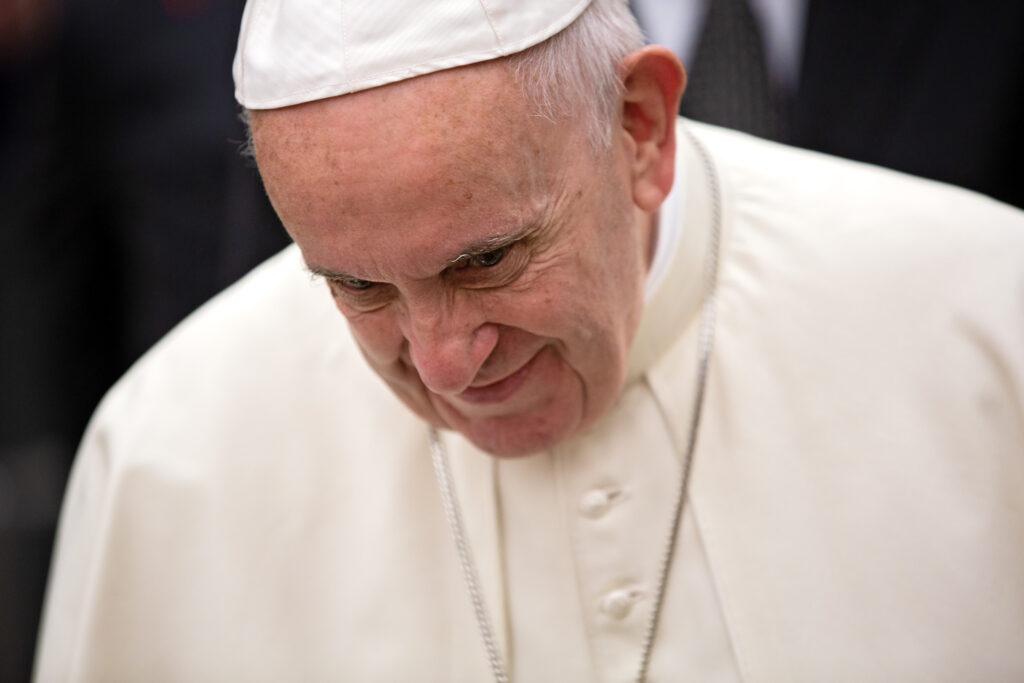
Significantly, the document also introduced the notion of “reciprocity” to describe the relationship between men and women in the Church — replacing the more familiar and more static vocabulary of “complementarity.” This shift, quietly radical, was taken up by Francis himself in Christus Vivit (2019).
The 2019 Synod for the Amazon went further still. Women were not merely discussed; they were recognized as protagonists. The Final Document made concrete proposals: the opening of the installed ministries of lector and acolyte to women, the creation of an instituted ministry of women community leaders, and an explicit mention of the female diaconate. It was here that Francis made one of his most prophetic statements on this question: “If the Church loses women, in their total and real dimension, it risks sterility.” The word “sterility” was not chosen lightly. It connected the question of women directly to the Church’s capacity for life, for generation, for mission. In Querida Amazonia (2020), he highlighted their central role and encouraged their access to “functions, including ecclesial services, which do not require Holy Orders” — while holding open the broader questions that the Church had not yet resolved.
The Synod on Synodality (2021–2024) marked the most decisive turning point. The phase of local consultation — the widest listening process in the history of the Church,
involving thousands of people on every continent — revealed with unmistakable clarity the planetary scope of women’s desire for genuine participation. Everywhere, in every culture, in every ecclesial context, women asked to be heard, to be included, to be trusted. Most significantly, for the first time in the history of the Synod of Bishops, 54 women were named as full members with voting rights for the 2023 and 2024 Assemblies — a structural change with consequences that went far beyond the numbers. The experience of women and men, bishops and laypeople, sitting at the same round tables, praying together, thinking together, deciding together, was described by many participants as one of the most transformative aspects of the entire process. Several bishops told me personally that the presence of women was truly enriching.
The Final Document (2024) named the wound clearly: “The need for conversion in relationships concerns without ambiguity those between men and women. The recurring expressions of pain and suffering from women of every region and continent, lay and consecrated, during the synodal process, reveal how often we fail to do this” (n. 52). These are not diplomatic words. They are the honest fruit of a spiritual process which came to state “This Assembly asks for full implementation of all the opportunities already provided for in Canon Law with regard to the role of women, particularly in those places where they remain underutilised. There is no reason or impediment that should prevent women from carrying out leadership roles in the Church: what comes from the Holy Spirit cannot be stopped.” (FD §60)
One of Francis’s most concrete contributions to this transformation was his appointment of women to positions of leadership in the Roman Curia and in the life of the universal Church. As the first woman appointed as Under-Secretary of the General Secretariat of the Synod of Bishops — with the right to vote in a synodal assembly — I experienced this as a prophetic gesture and ecclesiological act taking its roots in the path opened by Pope Paul VI inviting women as observers to the third and fourth sessions of the Second Vatican Council. It said, in a language more powerful than any document, that the contribution of women to the Church’s discernment is not supplementary: it is constitutive and has to be implemented at all levels of the Church.
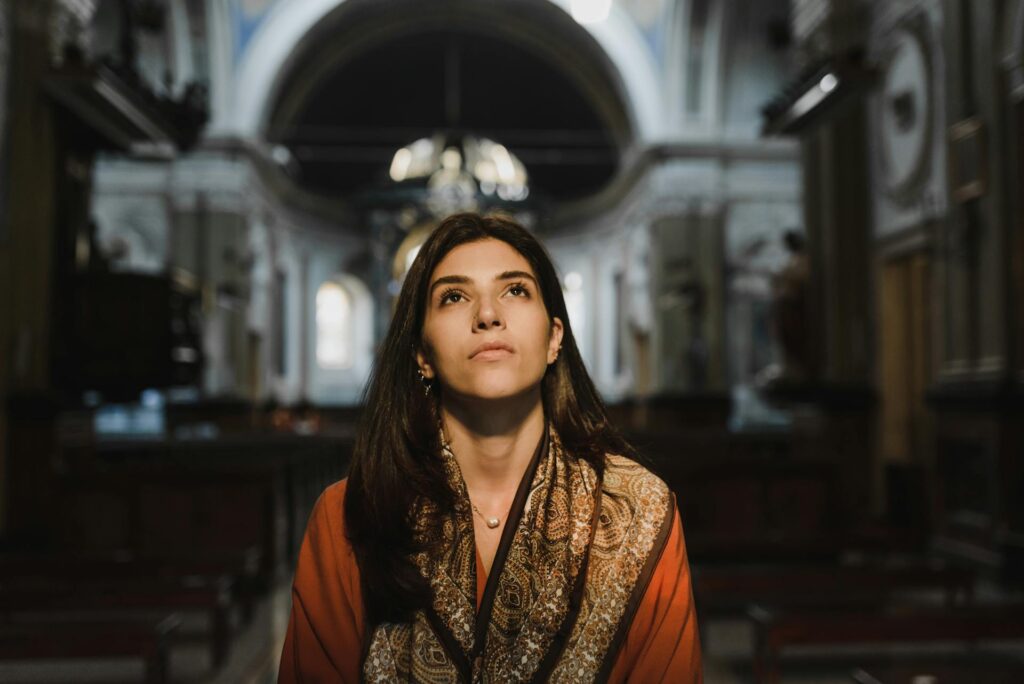
Throughout his pontificate, Francis appointed for the first time women to head departments of the Holy See, but also to serve on commissions previously closed to them, to participate in international dialogue at the highest levels, to preach meditations in Vatican meetings etc. In the field of theology, Francis encouraged the development of what he called a “feminine theology” — not a theology about women, but a theology that thinks from the perspective of women, integrating their experience as a genuine theological source. He also explored issues and challenges regarding women with his C9 council entrusting a sister to organize this process of reflection with a great freedom. The International Theological Commission, the pontifical faculties, the synodal commissions: all saw greater female participation during his pontificate. And the final report of the Study-Group 5 on women that
he created is an example of a new way to do theology listening to women and integrating their experience and perspectives.
In the sphere of charity and peace-building, Francis was explicit. At the international conference “Women Building a Culture of Encounter Interreligiously” in January 2023, he said: “Our quest for peace must involve more and more women. For women bring care and life to the world: they are themselves a path toward peace.” This is not sentiment. It is supported by a growing body of research demonstrating that peace processes in which women are substantially involved are significantly more likely to produce durable agreements. A Church that takes seriously its vocation to be “a sign and instrument” of the unity of the human race (LG 1) must take seriously the role of women as peacemakers — not as a concession to contemporary culture, but as a demand of the Gospel.
With Pope Francis concrete steps have been made: the 2021 Motu Proprio Spiritus Domini opened the installed ministries of lector and acolyte to women; the ministry of catechist was instituted without distinction of gender; women were named to significant positions in the Roman Curia. Pope Leo XIV continues on this path. And yet the Final Document is clear: “Women continue to encounter obstacles.” Canonical reforms remain incomplete. The question of the female diaconate has not been closed. The presence of women in structures of governance remains deeply insufficient in many parts of the Church. It is first a spiritual and cultural therefore ultimately a question of conversion — the same conversion to which the synodal process has been calling the whole Church. It requires a change of heart, a change of mindset, a new way of seeing and living relationships between men and women. And that is precisely what genuine synodality, practiced over time, can generate.
The joy of being a missionary Church, which Francis proclaimed and embodied, is inseparable from this. A Church that walks with women — that listens to them, learns from them, is governed with them — is a Church more fully itself. And a Church more fully itself is a Church more fully capable of its mission: to be, in a broken and divided world, a sign of the unity of all humanity, and a servant of the peace that the world cannot give itself.
One year after his death, we continue to give thanks — and to walk, without fear, with Pope Leo XIV on a path toward a Church in which every voice is heard, every charism honored, and every person — women and men alike — can carry on the mission together as protagonists.