What happens when the waiting ends and the journey is over? There has been so much preparation, so much expectation but does the arrival live up to all that we have hoped for? Already, the Christmas tree is filled with lights and the presepi or nativity scenes have captured our imaginations. For a moment they transport us out of our time and situation to this place in Bethlehem.
It is strange to arrive at this this place. Despite all our inventiveness and imaginative additions both ancient and contemporary, it is really not so attractive and not at all what a marketing firm would advise. It risks disappointment – can this really be the place, the moment, when God becomes one of us? Can our world and our understanding of God really be changed forever? Even after telling the story for thousands of years, this is not what we or our world expects. Arrivals, even to familiar places, can be disorienting.
Yet, no matter how distracted or disappointed or transitory the moment, there is still something at the centre of this time and this place that holds us, even just for a few minutes, before all the noise of our concerns, the insecurities and precariousness of the world call us back to ‘reality.’ `Despite the ways in which we turn Christ’s nativity into a sort of magical fairy story, its reality is never completely erased or obscured: The birth in poverty and squalor, the vulnerability, the whole making-do with what is at hand and available in the emergency of a moment which can’t be stopped or delayed. Like so many babies, Jesus is born into the precarity and immanent violence of a world that does not even know his existence,nor does it care weather he lives or dies or what he becomes. He has only the love of his mother and father to protect him and the only power they have is their faith. Is this where advent brings us? To the place where hope begins or where it ends?
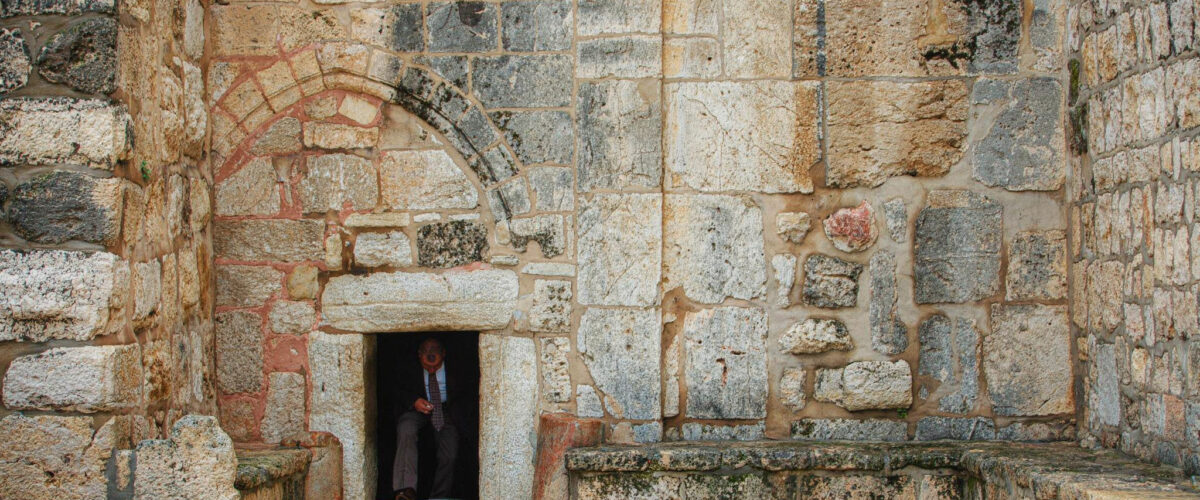
In Bethlehem is the ancient church or basilica of the Nativity. Under the high altar, now the crypt is the grotto of the nativity, the cave where it is believed Jesus was born. You cannot enter the basilica except through a very small door, ‘the door of humility.’ It is not only a door but a disposition. There is no fence around the mystery of the incarnation; anyone can approach the child but to enter into the reality we have to come in humility, in our own poverty without disguise or pretence. All our preconceptions have to be laid aside; we can only meet God on God’s own terms not ours, no matter how reasonable or necessary. There we do find him, a newly born baby; not surrounded by wealth, status or advantage buta child born into the most vulnerable of all circumstances and soon to be a refugee. His vulnerability is the way he opens the door for us to come in. He does not hide from us and so we, too, can comeunashamed of our own vulnerabilities whatever they are, whether we believe or don’t believe, no one is left outside.
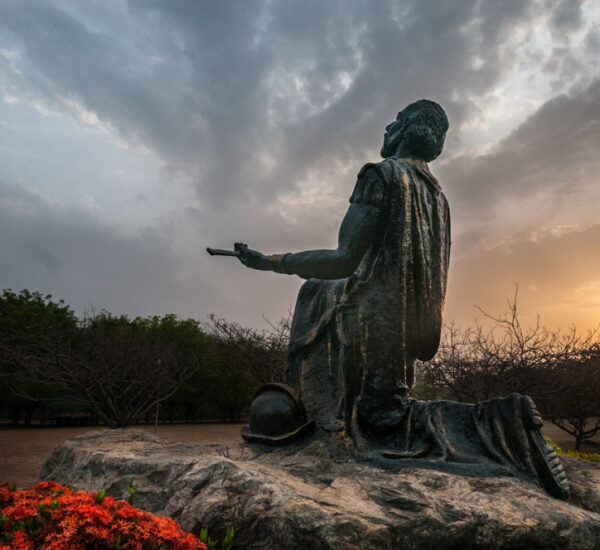
Contemplating the nativity in the Spiritual Exercises of St Ignatius we are asked to put ourselves in the scene as ‘a poor unworthy servant’. We know that we have no claim that makes us worthy to be here or gives us right of entry. It is only because God has invited us – all of us. Not only are we filled with the sense of our own unworthiness but even more we are overwhelmed with so much gratitude. Thisgratitude is the dynamic mode of love that fills our hearts with the desire to serve the child and Mary and Joseph ‘in their necessities’. It doesn’t matter that we may not be able to do much. With a simple, moving, joy these new parents don’t ask us to do more than we are able; they only want us to be there, part of their family, to share their own wonder and to do whatever we can, no matter how small, to help them. In the contemplation on the nativity we have entered into the school of love’s mission – the service of God’s Son, Jesus Christ, born in Bethlehem. Only if we can come in our own poverty and need can we begin to grasp the depth of what has happened and, in the quiet luminosity of this moment,see the world with other eyes.
Advent brings us to the little door and hope invites us to enter. If we can do that, then grace has not only entered our world but our lives. We have become his servants to a world in need of healing and a servant of a God who can become one with us in every place, time and need. We will have discovered our meaning and our humanity; the great gift which only grows in being given.