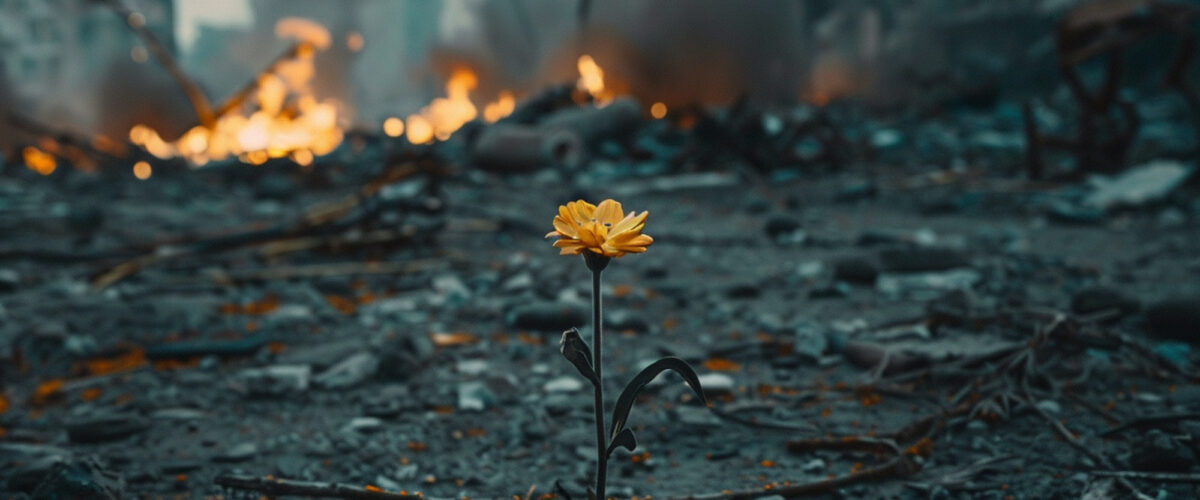
In a world scarred by suffering, sin, and death, where can we find hope today? Across continents, the ravages of war afflict not only combatants but also women and children who bear the heaviest burdens. Many communities continue to grapple with grinding poverty, deep injustice fueled by corruption, and the relentless destruction of the environment.
These realities are compounded by unbridled capitalism and the rise of autocratic leaders who skillfully leverage globalisation and technology to promote populism, polarisation, and post-truth narratives (Moisés Naím, The Revenge of Power, 2023). All these forces have intensified the suffering of those already living at the margins.
Against this bleak backdrop, Pope Francis offered a profound reminder during his weekly general audience on 11 December 2024. He said that the “most beautiful gift” the Catholic Church and its members can give the world is a reasonto live with hope. He added, “The Christian cannot be satisfied with having hope; he or she must also radiate hope, be a sower of hope…. Hope is not an empty word or a vague desire of ours that things may turn out for the best; it is a certainty, because it is founded on God’s fidelity to his promises. This is why it is called a theological virtue: because it is infused by God and has God as its guarantor.” His words invite us to move from passive belief to an active witness grounded in God’s faithfulness.
As I reflected on the Holy Father’s call, I recalled a story during a forum on Myanmar in 2023. A woman working with the Jesuit Refugee Service shared the daily struggles faced by communities since the 2021 military coup. Continuous conflict between the military and rebel forces has killed and injured thousands, including women and children. She showed us a photograph of a mother leading a funeral procession for her son, who had died in one of the relentless military bombings. The family could not bury him immediately because they had to keep fleeing the attacks. Only later did they manage to find a village where he could finally be laid to rest.
As she continued her account, she described the grave dangers faced by humanitarian workers. Threats, harassment, and targeted attacks forced even United Nations personnel to withdraw from the country. She herself had received personal threats while striving to provide food and shelter to internally displaced families. When we asked why she chose to remain when she had the option to leave, she quietly responded, “Who will take care of our people if we left?” And when we asked what sustained her amid so much danger, she answered without hesitation, “It is my faith that keeps me hoping against all hope.” Her words moved many of us to tears.
A similar resilience surfaced during a recent visit to the United Kingdom, where my former professor shared a newly published book giving voice to Palestinian students whose studies were cut short by the destruction of their schools and universities. As I leafed through its pages, one poem struck me deeply for the raw truth it carried and the courage it insisted upon. It was Wissam Yousef’s* We died…you scrolled, a searing reminder that hope sometimes takes the form of perseverance—perseverance on being heard, remembered, and named:
Someone asked me, Why do you speak out? Why do you write?
Because they want us to die in silence – to vanish without a trace,
Without a story.
We write because writing is resistance.
We share because silence is complicity. Silence is a witness that lies.
Yes, many know there’s famine in Gaza –
But knowing isn’t enough.
We don’t write just so the world “knows”.
We write so no one can claim they didn’t.
We write so they can’t look away without guilt.
We write to expose.
We write to disturb their comfort – to rattle sleeping consciences.
We write so that the child who died of hunger is not forgotten.
So that the hungry have names.
So that the killers are named too.
The poem’s urgency resonated with the woman from Myanmar and the testimonies of countless others who dare to speak truth in the midst of suffering. Their voices remind us that hope is not passive optimism. It is a commitment—a refusal to surrender to silence, indifference, or despair.
In all these stories—from Myanmar to Palestine and across so many other wounded lands—we witness hope not as a distant ideal but as a lived reality expressed in courage, compassion, and truth-telling. Hope flourishes wherever people choose fidelity over fear, solidarity over self-preservation, and truth over silence. It lives in every act of accompaniment, in every word that resists injustice, and in every prayer uttered for a world restored.
As Christians, we are called not only to believe in hope but to embody it. To “radiate hope,” as Pope Francis says, is to stand with those who suffer, to speak when silence harms, and to trust that God’s promise of new life is stronger than any power that deals in death.
In these dark times, may our faith move us to hope, our hope move us to action, and our actions bear witness to the God who never abandons His people. +AMDG+
Jun Viray, SJ
*Taken from the book, “We Are Still Here”: An Anthology of resilience, grief, and unshattered hope from Gaza’s university students. Edited by Zahid Pranjol & Jacob Norris