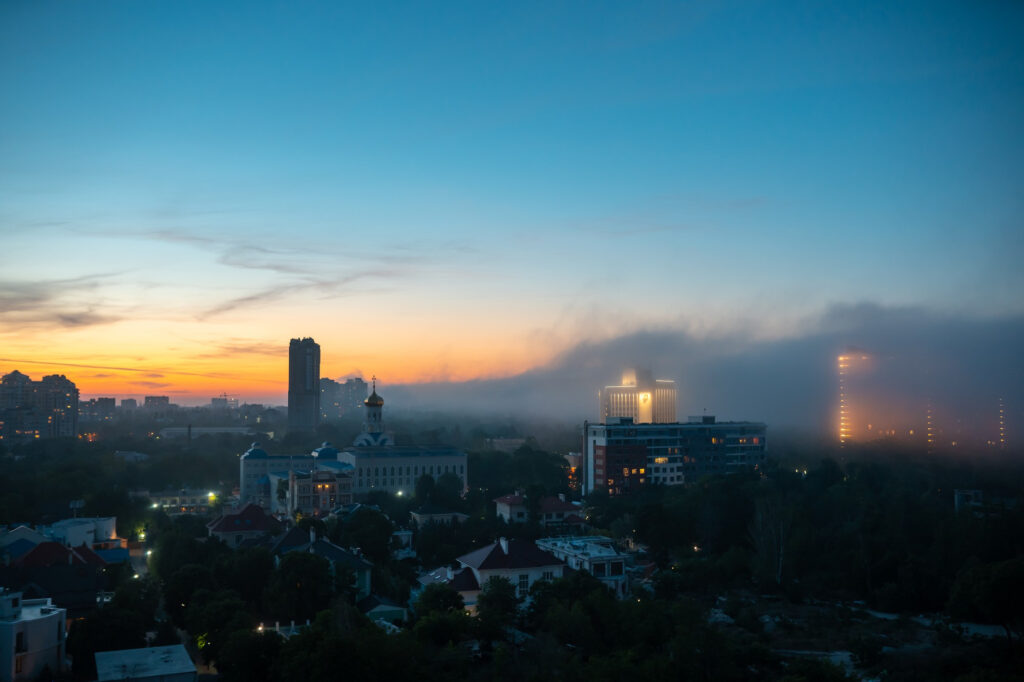
Since the beginning of the war, the situation in Kyiv has been marked by daily air raid warnings. Those sometimes last all night or several times during the day, but the war has been going on for a long time, and people have to work. Some of them take shelter immediately after the signal sounds first, and they check their mobile apps to see where and what is flying. If possible, they move further away from the windows in buildings. They only use shelters when they see that it is a serious attack. These can come unexpectedly, so it’s a lottery. The soldiers try to shoot down the Shahids (Iranian drones) before they reach the city, but it is not certain that they will succeed every time. Especially when they fly low.
Somehow, we have to live in these conditions. I now work for Depaul, a non-profit organisation. In the morning, before leaving for work, I first check which bridges are passable as some are closed when there is a warning. Sometimes the app shows that rockets are flying, but people are stuck in morning traffic, so they just wait in their cars to see how the situation develops. They could be hit at any moment. Sometimes it seems as if the commute to work is more important than life itself.
From my side, I can’t say that the explosions and all the noise don’t affect me. Sometimes there is an explosion first and then the warning because the missile is detected too late. When the war started, I was here with my own sister (Katarina, who is also a CJ member), and the provincial superior at the time asked us if we wanted to leave Kyiv for safer areas. However, she left the decision up to us saying that we had a better view of the situation on the ground. I am grateful for that because we immediately realised that it was necessary to get involved and help the local people. So we stayed and told ourselves that Kyiv was well guarded and that it could be worse elsewhere. At that time I was still working at a Charity. First, we converted the Charity building’s kitchen and storage room in the basement into an air-raid shelter.
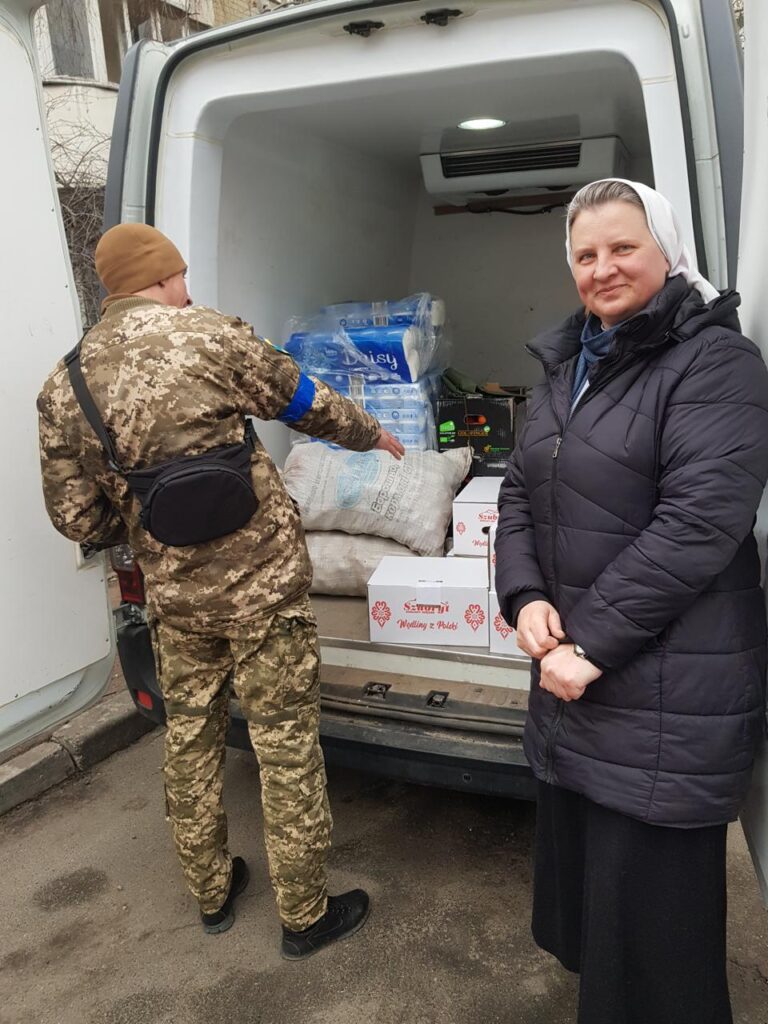
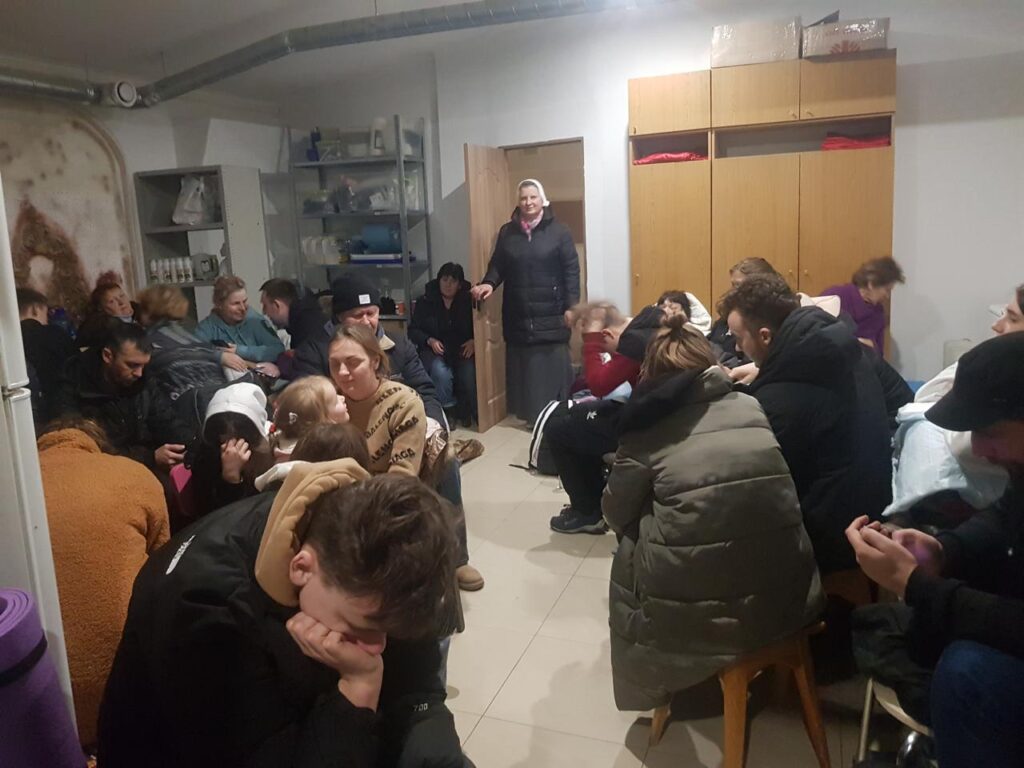
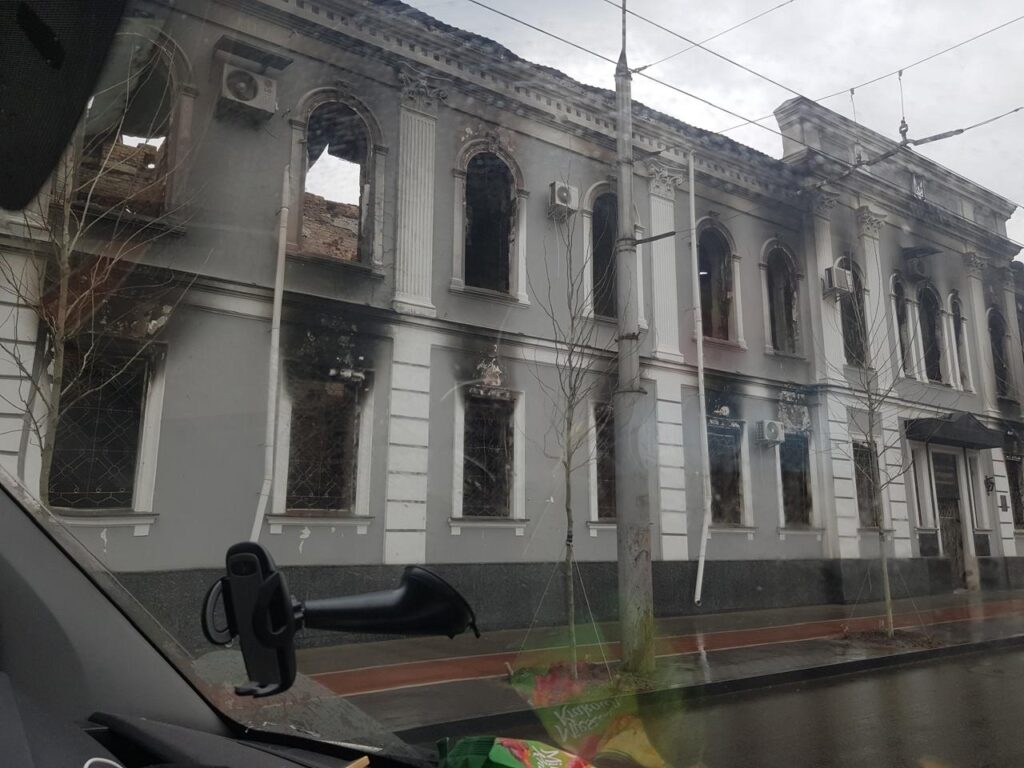
The first day of the war was challenging. My instinct of survival seemed to prevent me from accepting that what was happening was really happening. My subconscious refused to accept the danger that I could lose my life at any moment. Yet in the early days, the explosions were most intense, and the Russian troops were close to the city. I focused on the fact that something had to be done. We received calls from sick people asking for medicine and food. It was difficult to obtain these things, and that kept me busy. There were huge queues for bread, and we had to go to several pharmacies to find anything at all. In those moments I understood that I was in the right place, that I was needed here and that I should stay. Many people came to our shelter with small children. We helped the families who were leaving Kyiv to get at least to the outskirts of the city so they could continue on their way.
We tried to offer words of encouragement to frightened people. They felt reassured that there was someone who cared about them, who would take care of them. In the shelter, we tried to talk to them. We prepared games for the children to help them relax, and in the evening, we prayed together at least briefly. Now we are seeing many refugees arriving from war zones who have experienced all the horrors up close; you can sense even greater fear in them.
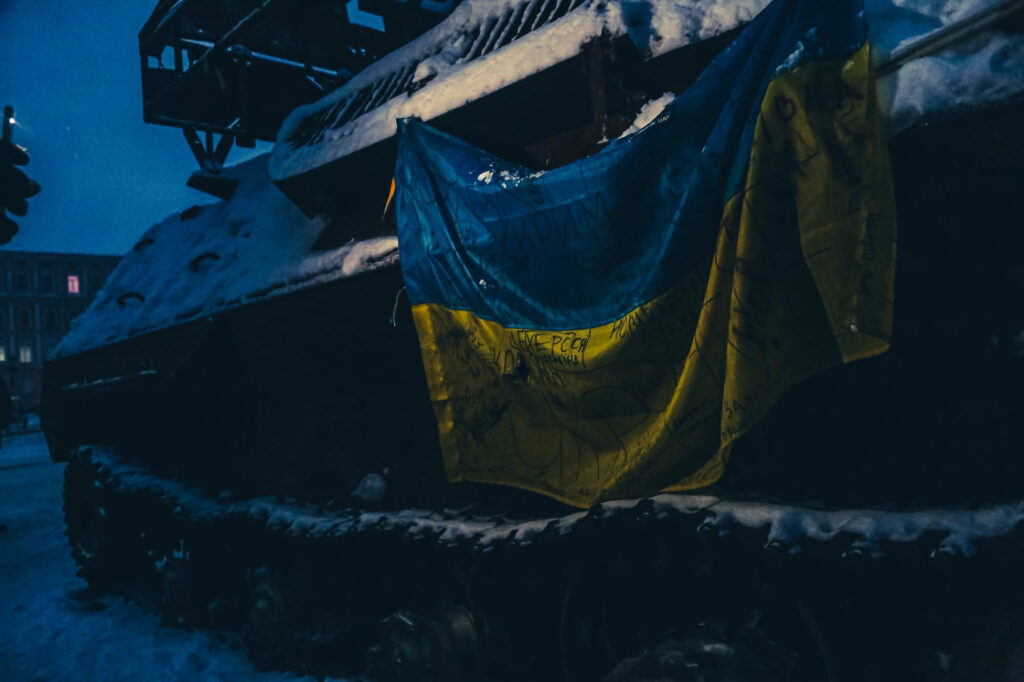
These are people who were afraid to leave because they didn’t know where to go; they had no support network, and they didn’t have enough money. Only now have they been forced to leave because the front line is passing right through their area. We are connecting with organisations that operate in these affected regions. Through them we are informing people that they should not be afraid to leave, and that we can provide them with free accommodation here in Kyiv until they settle down and find work. We also provide them with psychological support. Some managed to flee with only the clothes on their backs. I admire how these displaced people help each other despite everything. They come from different regions of eastern Ukraine but they are like one family.
We heard many tragic stories from them. What helps us process them is surely faith, the sacraments, Holy Communion, and prayers offered for these people. And also, special webinars that we attend as social workers. There are indeed many difficult stories, especially now that socially disadvantaged families are being evacuated, as I mentioned. People who were able to leave the war zones did so long ago. But those who didn’t know what to do stayed there until the last moment. Recently, a woman with four children who is missing her right hand came to us. Her husband died, and she is on disability. We are helping her as much as we can. Fortunately, she is doing quite well.
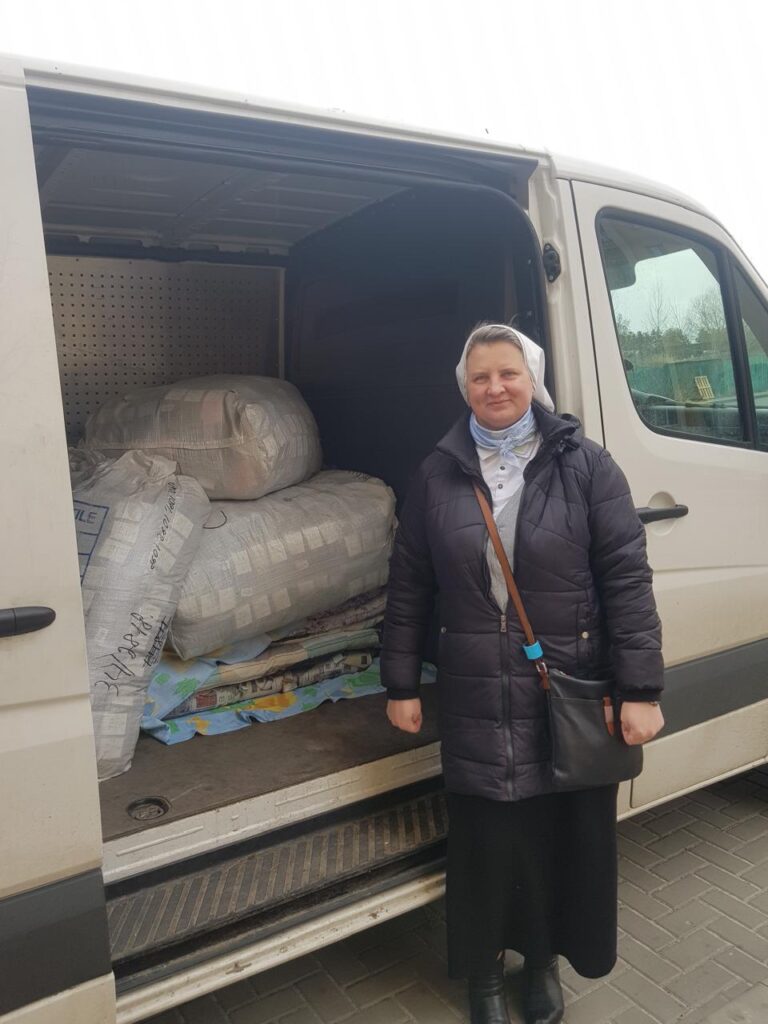
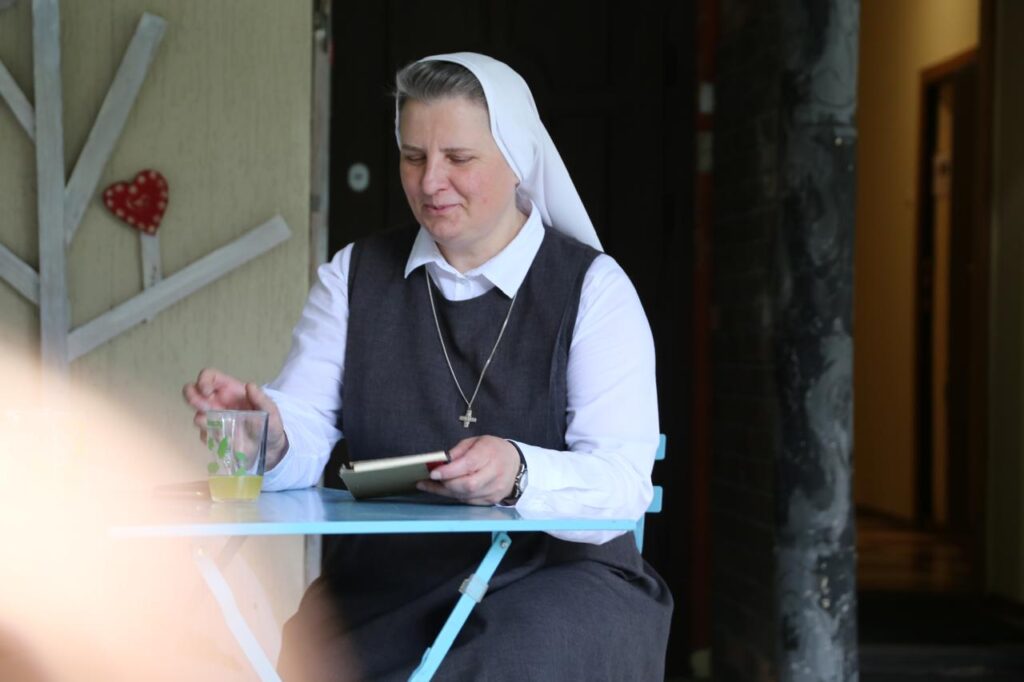
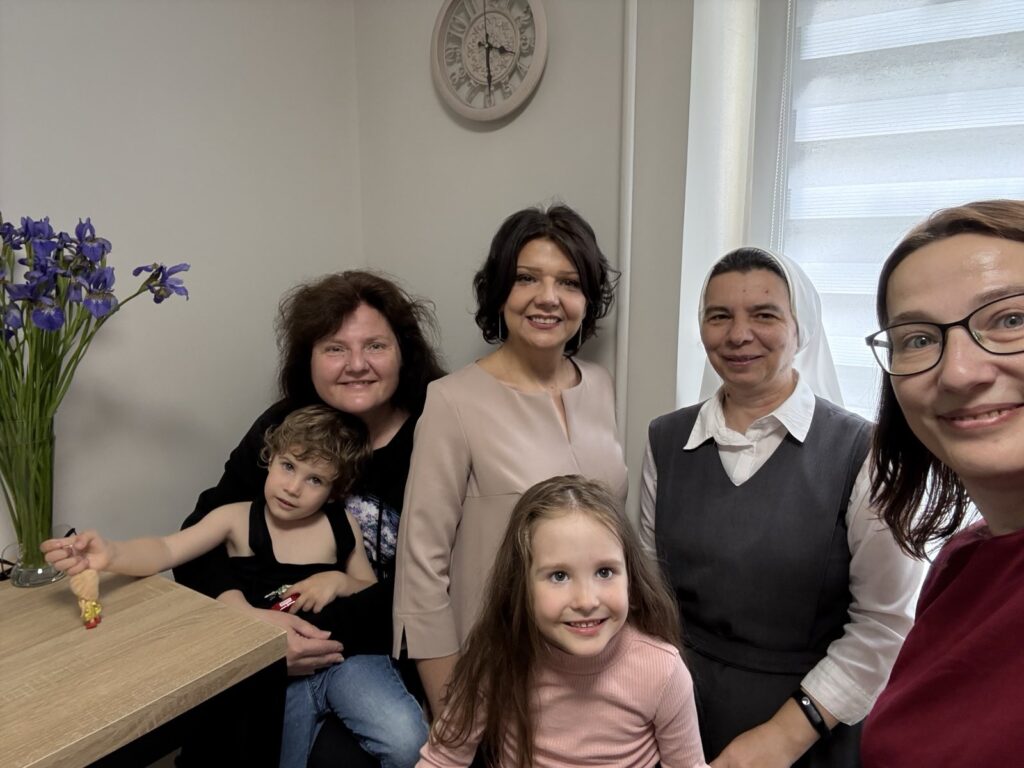
The sick, pregnant women, and other vulnerable groups have had a particularly difficult time. I remember how, in the early days of the war, we had a girl who was nine months pregnant. She was expecting her first child, and her husband was in the army. We drove her to the doctor; her mother was with her, and that gave her peace of mind despite what was happening outside. We didn’t know what would happen when she gave birth, whether it would be possible to leave the shelter or not, so we also looked for a gynaecologist. Fortunately, she was able to give birth normally in the hospital, but I was very emotional about it.
The war has been going on for four years. Some people who have lost everything may think God has abandoned them. Most of the people fleeing the front lines in eastern Ukraine are non-believers. There are a few churches in those areas. So, I haven’t heard such questions from them. Nor do they ask what they have done to deserve this. They do not see it that way. Rather, they show solidarity with each other in order to endure everything together.
When I reflect on the whole conflict as a consecrated woman, I find it particularly difficult to understand the scale of human malice. When I used to watch films or documentaries about World War II on television, I couldn’t comprehend that a person could be so full of anger. How is it possible to hurt another person so much? Now we are experiencing this as reality.
Many ask us if we expected this. To be honest, many of us in Ukraine were surprised that a bloody conflict of such proportions could break out in Europe.
Immediately before the war began, I did not perceive that it was coming. Of course, tensions had been rising since 2014. At that time, I had just moved from my former mission in Novocherkassk, Russia, to our host bakery in Prešov, from where I closely followed what was happening on the Maidan in Kyiv. Later, I went to another CJ community for three months to help out in the Russian city of Tyumen, and there I sensed that some people were speaking out against Ukraine. It did shock me.
From the beginning of the war, what hurt me more than the Russian president’s decisions was hearing ordinary people in Russia on television approving the intervention in Ukraine. I felt physical pain from how much hatred there was in those words. How can one person wish that on another? I know they are influenced by propaganda, but common sense has not been abolished. No one has removed their brains and replaced them with others.
We have just celebrated the Jubilee Year 2025, which invites not only hope but also forgiveness. How can we forgive war crimes, the rape of women, and tens of thousands of deaths? If I answer not from the point of view of faith, but from a human perspective, that is, for ordinary people in Ukraine, then it will not happen in their lifetime. It will not be the case that when the fighting stops, everyone will be forgiven. For forgiveness to happen, there must first be repentance. And it will be many years before a new generation emerges in Russia that thinks differently. For this, I continue to pray and to work.
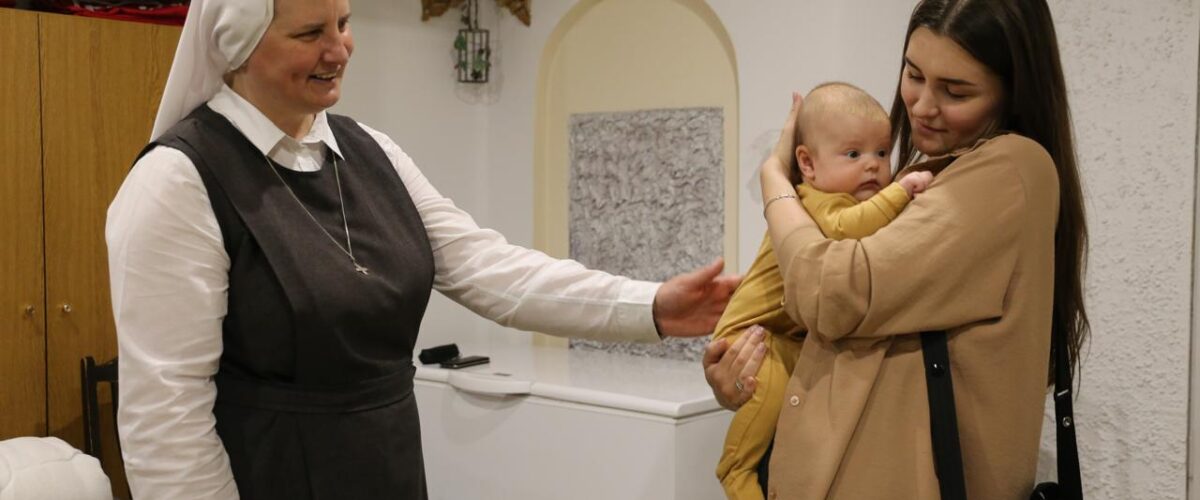
Sisters Anastasia Mazur and Villana Kramartchouk are members of the Congregatio Jesu and they are living in Kyiv.
Sr. Anastasia Mazur CJ, is a social worker for the non-profit organisation Depaul. She is responsible for a project to help war refugees adapt to life in Kyiv. Previously, she worked for a charity.
Sr. Villana Kramartchouk CJ, arrived in Kyiv in the Summer of 2022. She is an art therapist and works as a coordinator of the St. Joseph’s Centre in Kyiv. The Centre was established by the Major Religious Superiors Conference in Ukraine before the war as a psychological assistance Centre. Since the beginning of the war, the Centre has aimed to accompany children and adults in their difficulties: individual consultations with psychologists, psychotherapists, and spiritual advisors; sessions with a speech therapist and child psychologist for the youngest children; art therapy groups that help people find their inner strength; meetings focused on emotional stabilisation and support groups for adults. Many people need help and are grateful that they can get it there.